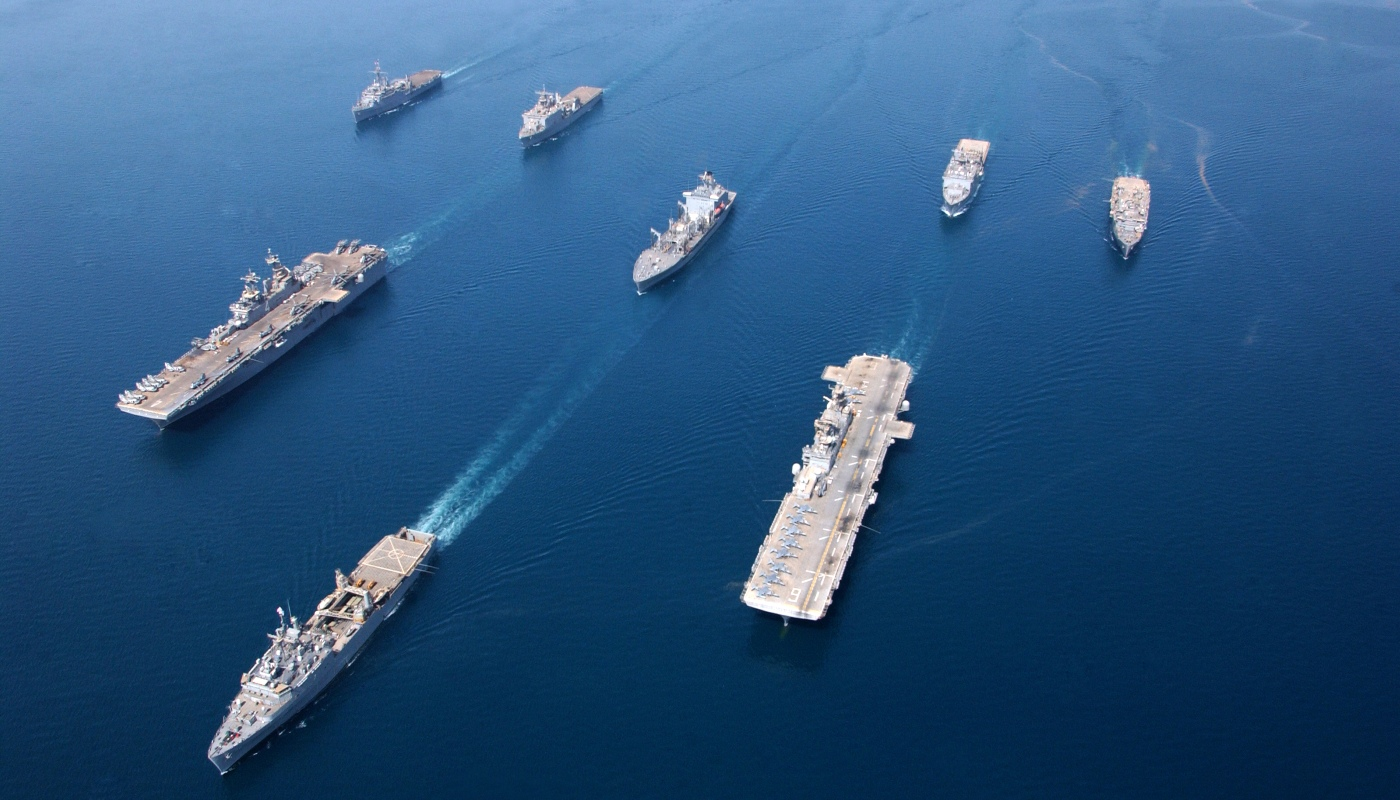
According to a report by the US Government Accountability Office (GAO), the US Navy’s amphibious fleet is in crisis. The report “Amphibious Warfare Fleet: Navy Needs to Complete Key Efforts to Better Ensure Ships Are Available for Marines”, was released on December 3 and records data that leads to the conclusion that the US amphibious operations ships are going through a difficult period and are in a worrying state.
According to the findings of the report, almost half of the US Navy’s amphibious ships are in poor condition and some could not be used for operational or training purposes. Specifically, the report states that: Nine of the 10 LSD (Landing Ship Dock) class ships, six Whitbey Island class and four Harpers Ferry class ships, five of the seven Wasp class LHA (Landing Helicopter Dock) ships and two of the 13 San Antonio class LPD (Landing Platform Dock) ships are in poor condition and only the two America class ships are in satisfactory condition.
The report states that the problems are due to several factors, such as the lack of adequate maintenance, problems in the supply of spare parts and poor planning. Specifically, the US Navy proposed the early retirement of some of the above ships, with the aim of saving costs, and canceled planned maintenance work. However, the entry into service of new amphibious ships is delayed, resulting in old ships remaining in service and even without having been maintained. This has led to problems, failures, forced docking and ultimately to reduced availability.