
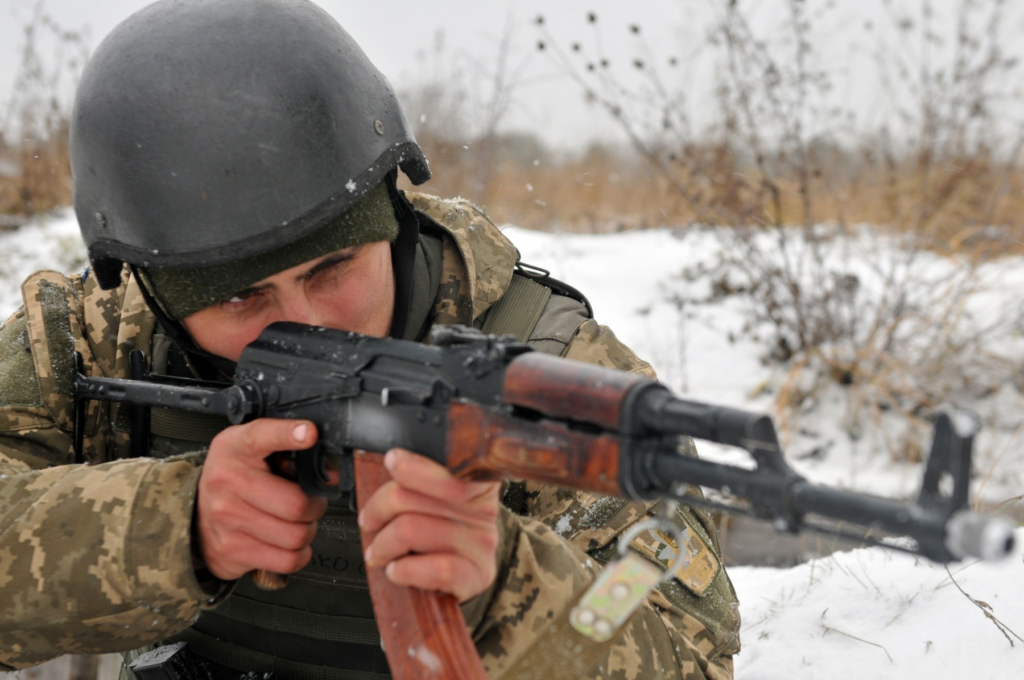

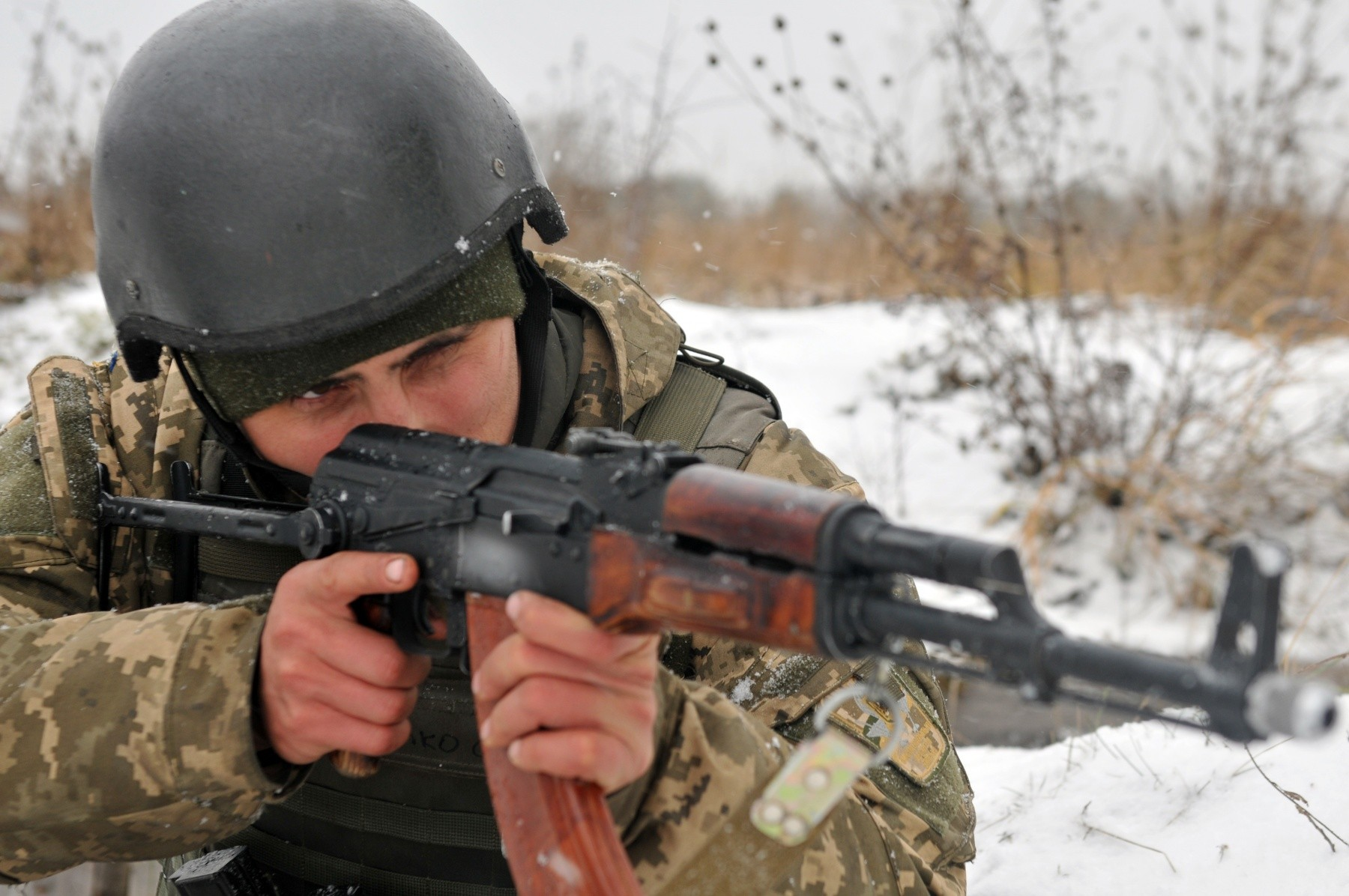
From February 2022 until today, Europe, which has shaped human history, has been using another people as a “shield”, smaller, poorer and much more exposed, a people who, with their fight for survival against a “giant” opponent – in the sense of infrastructures – remind Europe of what dignity and national defense mean. No celebration in Brussels, Berlin or Paris changes the essence that we all European citizens experience. Ukraine is fighting for its very existence, but the result of its resistance weighs on all of Europe. Without the Ukrainian embankment in the east, the current image of the continent would be tragically different, politically, militarily and morally.
Europe woke up late, and the term is more accurate than European capitals want to admit. For decades, its societies lived in a delusion that had been dressed up in ideological seriousness. History supposedly ended with the Fall of the Wall, Russia would gradually turn into a predictable trading partner, China would remain a huge factory without political aspirations, and the Americans would pay the security bill indefinitely. In the meantime, Europe would maintain its moral superiority intact, without the inconvenient costs that always accompany real power. All of this collapsed at dawn on February 24, 2022, when Russian tanks, with Soviet flags flying, crossed the Ukrainian border.
The Great Tradition of the European Manufacturing Base
The problem goes deeper than cut defense budgets. Europe had been shedding its own manufacturing base for years, moving heavy manufacturing, critical electronics, chemicals, vehicle parts, systems, and heavy construction to China, Turkey, and Southeast Asia, where costs were lower and regulations were looser. It kept for itself the “political power”: financial services, market regulation, green rhetoric, rich social contracts and a sense of cultural superiority. But it let go of something very precious, the industrial memory of a continent that once knew how to make everything itself.
Security became a service to be bought and not an obligation to be produced. Europe learned to order, certify, consult, set regulations and announce strategies. But it forgot to produce at scale, to store, to maintain ammunition lines, to keep alive machinists, technicians, foremen, production engineers and small companies that transform a design into a material product. The defense industry became for many countries a politically inconvenient remnant of the old Europe, while in reality it was the core of its autonomy strategy.
The numbers they expose
The numbers reveal the scale of the voluntary European demobilization with deafening clarity. Depending on the methodology, open sources give Greece 1,344 tanks or about 1,385 if different categories and levels of readiness are taken into account. But the essence does not change. The Greek army serves Leopard 2A4 and Leopard 2A6HEL, about five hundred Leopard 1A5, as well as older M60A3 and M48A5 in different utilization states. In practice, a small in geographical and population size EU member state, Greece, maintains a tank mass that exceeds the corresponding forces of many larger and richer member states combined.
Germany, the largest economy in the European Union, operates around three hundred tanks. France, a nuclear power and permanent member of the Security Council, has a much smaller tank mass. Italy and Spain, with economies and populations many times larger than Greece, are even lower. This is the historical truth of a continent that handed over much of its security to the Americans and spent the peace dividend on benefits, consumption, and illusions.
The same pattern is visible in the air, with different nuances. France maintains around two hundred to two hundred and twenty fighters in active formation, mainly Rafale and Mirage 2000. Italy operates with less than a hundred operational Eurofighters, while Germany currently has a Eurofighter fleet that, after the latest orders for the Quadriga program, reaches around 138 aircraft. Britain maintains a stronger aviation tradition, but it too bases a large part of its future on the F-35 and American technology chains. Greece, with its F-16V, Rafale, Mirage 2000-5 and the prospect of the F-35A, remains disproportionately strong in terms of aviation for its economic size.
The German case is the most symbolic. In November 2025, Germany unveiled the first new Leopard 2A8 as a major national milestone, the first newly built tank for the German army since 1992. Thirty-three years without a new tank for Europe’s largest economy is… an institutional defeat. Europe believed that history would kindly wait for it to remember what strength means. History woke it up to a difficult morning with Russian missiles in Ukraine.
For Greece, this picture has a double reading. On the one hand, it shows that maintaining strong Armed Forces was the right choice and not a fiscal whim. On the other hand, it reveals how dangerous it would be for the country to be content with having numbers. The war in Ukraine proved that numbers are valuable only when accompanied by support, ammunition, spare parts, availability, reserves, training, industrial competence and political will.
Support and its reversal
It is fair to acknowledge that European support for Ukraine has been significant. Arms packages, endless shipments of ammunition, training of tens of thousands of Ukrainian soldiers, funding of state operations, humanitarian aid and political cover have kept Kiev afloat. The European Union has mobilized enormous resources and now links its own security to Ukraine’s survival. But beneath the numbers lies an inconvenient truth. Europe is helping Ukraine, while Ukraine is fighting for Europe.
Packages are approved in Brussels, arms deliveries are announced in the capitals, contracts and subsidies are given to European defense industries. In Ukraine, meanwhile, a front of over a thousand kilometers is being maintained, daily missile attacks on major cities are being endured, territory is being lost, others are being saved, time is being bought. Time that saves the lives of Europeans, who continue to live as if the war were unfolding in some distant hemisphere. Ukraine became the living border between Russian autocracy and a Europe that had forgotten what the very concept of a border means.
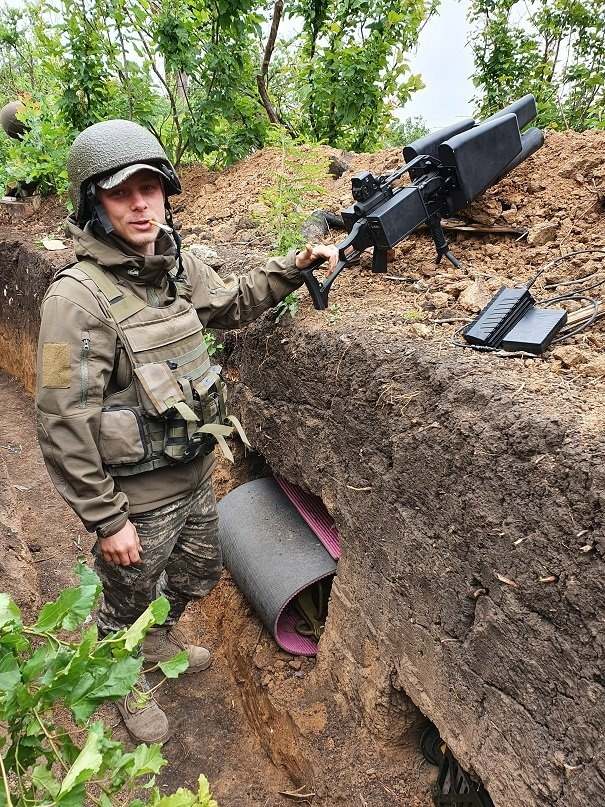
Here lies the real moral dimension. Europe’s lost honor is not saved by a summit, nor by solemn declarations of European values. It is saved by a people who refused to exchange their freedom for cheap natural gas. Ukraine paid with blood for the answer to a question that many European societies avoided asking themselves. How much is freedom worth when the heating bill goes up. How much is the sovereignty of a people worth when the cost of electricity goes up.
In several European societies there is a not insignificant part of public opinion that would tacitly prefer the Ukrainian defeat, as long as it was accompanied by a fall in prices and a return to convenient normality. There are political forces that talk about peace and mean capitulation. There are parties that appear to be anti-systemic and end up reproducing the Russian narrative as it is. Ukraine responds to all of them every day in the field, with losses, with stubbornness, with technological ingenuity, and with a society that continues to produce amidst the sirens.
The laboratory of modern warfare
This same society has transformed into something unprecedented by European standards, a real laboratory of modern war technology. A country that entered the war in 2022 with a limited production base in unmanned systems, today has an ecosystem that operates at the pace of a technological start-up and a war economy at the same time. Ukrainian drones are a symbol of a country that transforms need into industrial innovation.
Ukraine is certainly not completely self-sufficient in every component of every drone. But what it has achieved is perhaps even more important. It has switched to massive domestic final assembly, reduces dependence on ready-made Chinese systems, develops critical parts and adapts its production based on the data of the front. Where Europe talks about strategic autonomy as a political slogan, Ukraine treats it as a matter of survival.
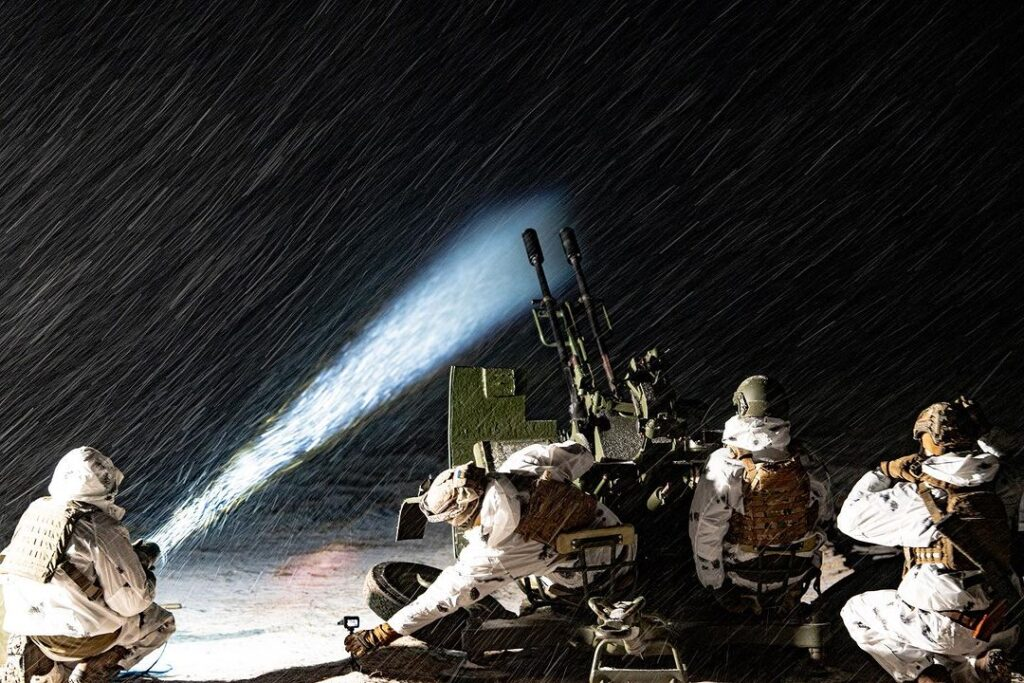
The Russian Shahed and the Iranian-designed munitions have changed the anti-aircraft routine of war. But Ukraine did not remain a passive recipient. It created mobile interception teams, combined sensors, machine guns, portable anti-aircraft, electronic means and its own drones, while its experience in dealing with Iranian drones is now of interest to countries far beyond Europe. This is the essence of adaptation. The enemy finds a new weapon, you find a cheaper and more massive way to cancel it.
In ground robotic systems, the Ukrainian philosophy is even more radical. Kiev plans to procure tens of thousands of ground robotic units, machines that transport ammunition to the front lines, evacuate the wounded under enemy fire, lay mines and support attacks. Already incidents with Ukrainian robotic ground vehicles show how quickly war is changing. Ukraine is implementing robotic ground warfare on a real scale, not in exhibitions and presentations, but out of necessity.
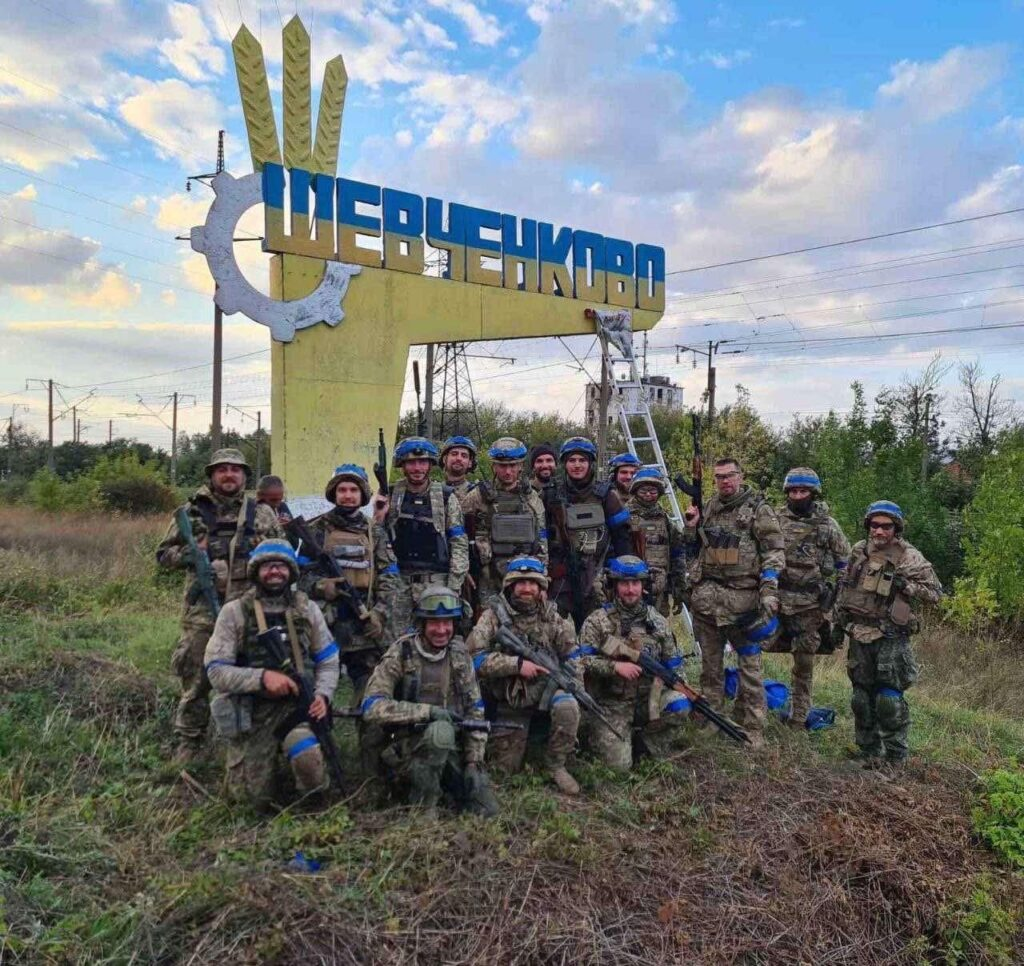
The most important thing is the philosophy behind it all. Ukraine understood that the war of the 21st century is won by whoever combines massiveness with speed of production, and acceptance of low-cost material losses. The classic European approach of producing excellent systems, extremely expensive, complex, slow, with multi-year contracts, endless certifications and prices, inevitably leads to small numbers. Whereas Ukraine produces, tests, loses, fixes and re-produces in weeks instead of years.
The same logic is evident in missiles. The Neptune and Flamingo, along with Ukrainian long-range drones, show that a country without the resources of France, Germany or Britain can create cheaper means of strategic pressure, if it accepts the need for rapid production and continuous development. Europe often treats the cruise missile as an expensive, rare and politically burdensome tool. Ukraine treats it as a means of warfare that must be available in huge numbers.
Russia is adapting, of course. It has the people, the artillery, the industrial strength, the energy resources and the authoritarian capacity to impose. But at the same time it is increasingly relying on an external ecosystem: Chinese dual-use aircraft, Iranian drone designs and North Korean munitions.
The National Defense Lessons Ukraine Teaches Europe
1st lesson: Ukraine has shown that a platform without weapons and availability is just a number on a list. Ukraine reminds us that in a war of attrition, whatever it can fly, transport, resupply, and evacuate wounded has a much greater value than what a “peaceful” balance sheet gives it.
2nd lesson: The second lesson is domestic production. The issue is for EU member states to move from demonstration and announcement to mass production, testing in units, continuous software upgrades, and stockpiling.
3nd lesson: The third lesson concerns the Army. Ukraine has proven that unprotected armored vehicles are targets, artillery without reconnaissance is useless, and an infantry unit without its own eye in the air is fighting at random. For member states, this means networking all the weapons of the army wherever they are. The islands, the air defense, the artillery, and the special forces with many unmanned means.
4th lesson: The fourth lesson concerns the Navy. Newly built surface ships (frigates, destroyers, etc.) and subsurface ships (submarines) are a huge qualitative boost. But Ukraine reminds us that even top-notch ships need cheap, massive, and expendable assets, drones, anti-drone systems, decoys, and large stockpiles of missiles.
5th lesson: The fifth lesson is the psychology of national resilience. Ukraine is enduring because its society has accepted that war is about its survival. Europe has been psychologically demobilized to a significant extent. It discusses defense as an expense rather than a vital investment. European society has historically proven that when it perceives a threat, it reacts in surprising ways. The point is to perceive the threat before it knocks on the door.
6th lesson: The sixth lesson is the reliability of alliances. Ukraine discovered the hard way that alliances are useful but insufficient on their own. American support can change with a change of faces. European unity can be blocked by an Orbán or a Fico. Europe-its member states must keep their alliances strong, but remember that national, member-state, self-reliant power remains the only absolute guarantee.
The (Ukrainian) Culture of Survival
That is why Ukraine is a laboratory of war, social organization, technological development and national will. It has great corruption, political extremism, structural weaknesses, a democratic deficit, dependence on Western support and suffers human losses and infrastructure destruction that will weigh for generations. But in the midst of all this, it has created a new defense culture. Where the citizen, the engineer, the soldier, the programmer, the manufacturer, the volunteer group and the state, seek solutions in the same room.
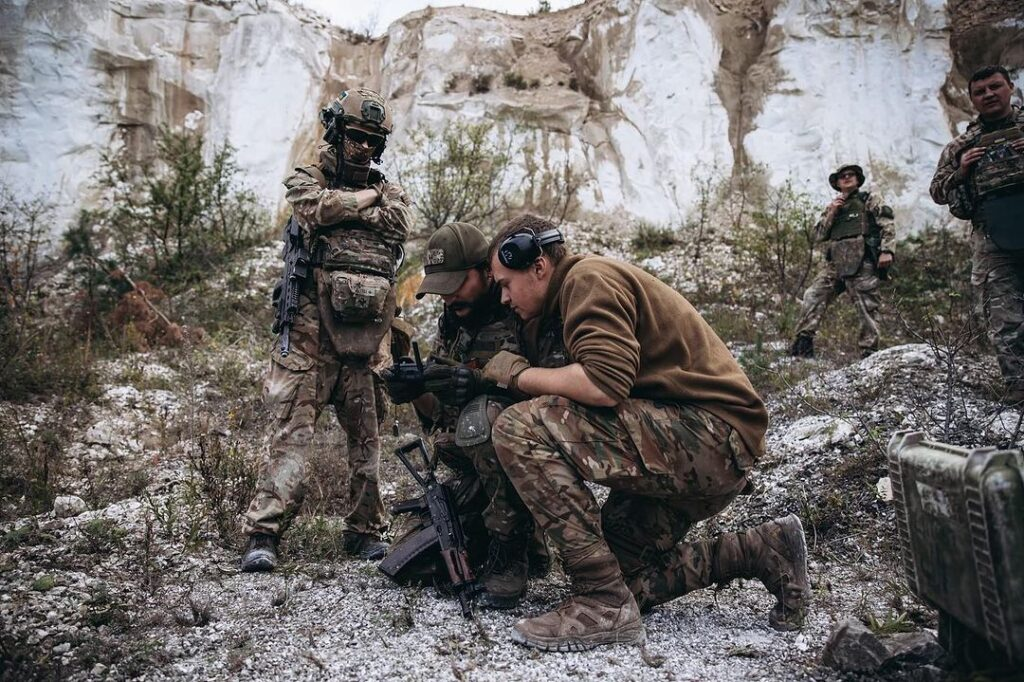
This is the opposite of the passive Europe of endless processes without results. It is also the opposite of a European mentality that often waits for the perfect contract, the perfect program, the perfect certification and the perfect political framework before starting. Ukraine did not wait for perfection. It created solutions in the midst of war, sent them to the front, received feedback and re-created them better. This culture must be transferred to the EU member states, without losing institutional seriousness, but also without drowning every idea in bureaucracy.
The European Union is today faced with an existential choice. It can continue to talk about strategic autonomy as a slogan, buying a little extra time with American protection, Ukrainian blood and Chinese production. Or it can rebuild its industrial base, warehouses, armies, reserves, infrastructure, ammunition, air defense, drones, anti-drone systems, and missiles. Above all, it can rebuild a culture of national and European resilience.
Germany is now trying to make up for lost time with huge arms packages. The Netherlands, which abandoned its organic armored force in 2011, is rebuilding its armored core almost from scratch. Countries that prided themselves on their defensive obsolescence as a sign of political maturity are discovering that the world has not matured with them. Money is necessary, but it does not immediately buy back the time lost, the production lines that were closed, the know-how that was emigrated, and the ammunition that was never produced.
Where European honor is saved today
Europe’s lost honor is saved today in Kharkiv, Odessa, Kramatorsk, Donbas. It is saved in drone factories operating underground because ground-based ones can be hit by Russian missiles. It is saved in workshops that rebuild armored vehicles under camouflage and camouflage nets. It is saved in mobile anti-aircraft units that hunt Russian Shahed night after night around Kiev and Lviv. It is saved in trenches that resemble pictures from World War I history books and in underground command centers where a country continues to function while being bombed.
European identity is not just the fine print of a regulation on batteries, emissions or public procurement. It is also the ability of a society to live up to its own historical responsibilities.
The final question is if all the peoples of Europe had even one tenth of the Ukrainian determination, the European Union would have no reason to fear any revisionism on its borders. It would have industry, armies, social cohesion, political will and strategic composure. The question is whether it has them today, and if it does not, whether it has time to find them before it has to fight for what the Ukrainians are defending today.

