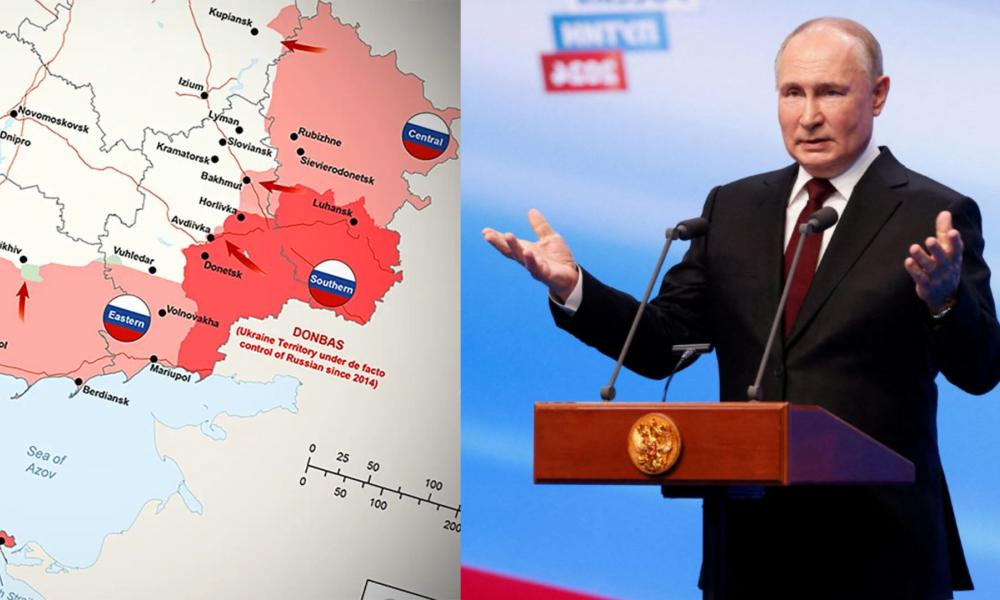
The developments in Ukraine are taking a dramatic turn, as a military conflict between Russia and NATO is getting closer and closer and while Kiev’s forces at the front have almost collapsed.
Ukraine will likely ask Europe to send European troops to the conflict with Russia, Ukrainian lawmaker Alexey Goncharenko told French broadcaster LCI. “If the situation on our front shows that Ukraine cannot stop Russian President Vladimir Putin on its own, without European military support and troops, yes, I think it is entirely possible that we will ask Europe to send troops,” he said.
Goncharenko, echoing Zelensky’s positions, also thanked French President Emmanuel Macron for the idea of sending troops to Ukraine, calling his remarks a “good message.”
The two conditions set by Macron
Emmanuel Macron, in an interview with The Economist, did not rule out the possibility of sending troops to Ukraine if Russia breaks the first line of defense and Kiev formulates a similar request.
According to him, “many EU countries” agreed with the opinion of Paris on this matter. (for more analysis, please read the analysis titled “Why is the sending of European troops to Ukraine a geopolitical earthquake for Europe?“). If the Russians achieve a decisive military victory and the Ukrainian leadership makes a request for military assistance, then France will respond, Macron said.
“If the Russians break through the first line of defense and if there is a Ukrainian request – which is not happening today – we should reasonably ask ourselves this question,” Macron told the Economist.
By “we” Macron means the EU leaders and the journalist’s question was: “Do you think other (EU) leaders should eventually share your position on this issue (sending troops to Ukraine) if we ultimately want to do we manage to contain Russia?’ Macron is convinced that EU leaders “should not reject the deployment of troops a priori, since in the summer of 2022 they ruled out sending tanks, long-range missiles and aircraft, but all these weapons are being supplied to Ukraine today.
The dangerous… strategic ambiguity
“I have a clear strategic goal: Russia cannot win in Ukraine. If Russia wins in Ukraine, we will no longer have security in Europe,” Macron said. It is not clear what it means to win or not win. Neither Western politicians nor Macron specify what they mean by this.
The EU will no longer have “protection” from the US. “We have to prepare to protect ourselves,” Macron constantly underlines.
Russia: We will have no red lines in European involvement
Russia, for its part, believes that many states that share France’s point of view are particularly calculating the risks of such involvement, as it would not be in their interest. Russian President Vladimir Putin has warned that sending a European corps to that country will not change the situation on the battlefield in any way and will only lead to dire consequences for Kiev. Responding to Macron’s words about France’s lack of red lines regarding support for Ukraine, Putin stressed that Russia will not have red lines against states with such an approach either.
Zakharova: NATO is preparing for war with Russia
NATO’s Steadfast Defender 2024 military exercise shows that the North Atlantic Alliance is seriously preparing for a war with Russia, Russian Foreign Ministry spokeswoman Maria Zakharova said.
“According to their scenario that includes all means, including hybrid as well as conventional weapons, they are undertaking military actions as a coalition against Russia. We must state that NATO is seriously preparing for a conflict with us. NATO representatives are speaking openly: Chairman of the NATO Military Commission Rob Bauer and NATO Supreme Allied Commander Europe Christopher Cavoli are speaking openly,” said Zakharova commenting on the NATO exercise.
Shock warning from German general: Ukraine cannot defend itself, NATO’s fatal mistake – Stop now before it’s too late Dramatic warning from an influential German general who has served in senior positions in NATO. He calls the continuation of the war in Ukraine a huge mistake and calls for an immediate end to the hostilities before it is too late for Kiev itself and possibly for the North Atlantic Alliance.
The West is making a fatal mistake by prolonging the war in Ukraine, warns German general Harald Kujat, former chairman of the NATO Military Commission. “It would be a fatal mistake to believe that Ukraine’s prospects will improve the longer the war continues. On the contrary, the disastrous consequences of this mistake can be avoided only if it is possible to prevent a military defeat through the early cessation of hostilities and the start of peace negotiations between the two warring countries,” said Kujat in an interview with Overton Magazin.
“The military situation has become very critical for Ukraine after the failure of the 2023 offensive and is becoming more difficult with each passing day. The Ukrainian Armed Forces have lost the ability to conduct offensive operations, and with the advice of the Americans, they are trying to reduce high personnel losses through strategic defense and maintaining the territory they still control,” added Kujat.
Ukraine is in an extremely weak position
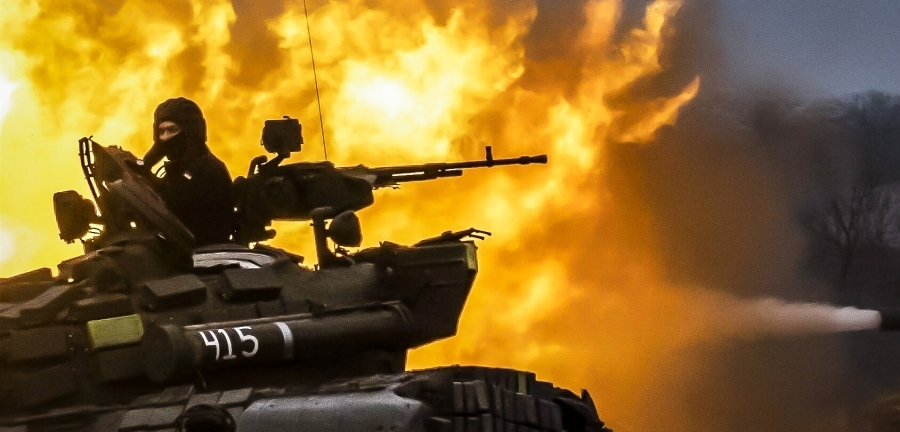
At the same time, the German general noted that Kiev is now in an “extremely vulnerable” position in areas vital to a successful strategic defense – without sufficient air defenses and artillery ammunition and with a “huge shortage of trained soldiers”. These deficiencies “reinforce each other in their negative effects.” “As bitter as it is to admit, despite the extensive financial and material support it received from the United States and Europe, Ukraine was unable to turn the strategic situation to its advantage. By contrast, last year, 12 Ukrainian brigades were trained by NATO countries and equipped with modern weaponry to breach Russian defenses in a major offensive that began with high expectations. The attack failed with heavy losses,” he recalls.
The Ukrainian crisis could have been avoided entirely if the US and NATO had been willing to “seriously negotiate” the draft Russian security treaty proposed by Moscow in late 2021, Kujat noted, adding that another chance to end the conflict – through negotiations in Belarus and Turkey in March 2022 – undermined by the West.
The US shifts the blame to Europe and insists on war
However, instead of seeking a humble de-escalation with Moscow, Washington is trying to keep up the pressure by continuously supporting Ukraine. Ukrainian President Volodymyr Zelensky said in a video conference on April 28 that he is negotiating for the US to provide military and economic support to Kiev over the next 10 years. The Ukrainian president claimed that the negotiations are taking place within the framework of the bilateral agreement on cooperation in the field of security.
Kyiv’s goal, he said, is to make this agreement the “strongest” of all its counterparts with other countries. We are also working on setting specific levels of support for this year and the next 10 years,” he noted.
It is clear that Washington is abandoning the war by shifting all the blame to Europe and is instead prioritizing the procurement of contracts for the US military-industrial complex, around which the bulk of the 10-year plan with Kiev will revolve.
Although the US is slowly abandoning the war, it does not appear that Washington is serious about negotiations, which Kujat points out Moscow has been urging as early as 2021. NATO has never taken peace negotiations seriously because, in in their view, the conflict represented an opportunity to weaken Russia at the expense of the Ukrainians.