
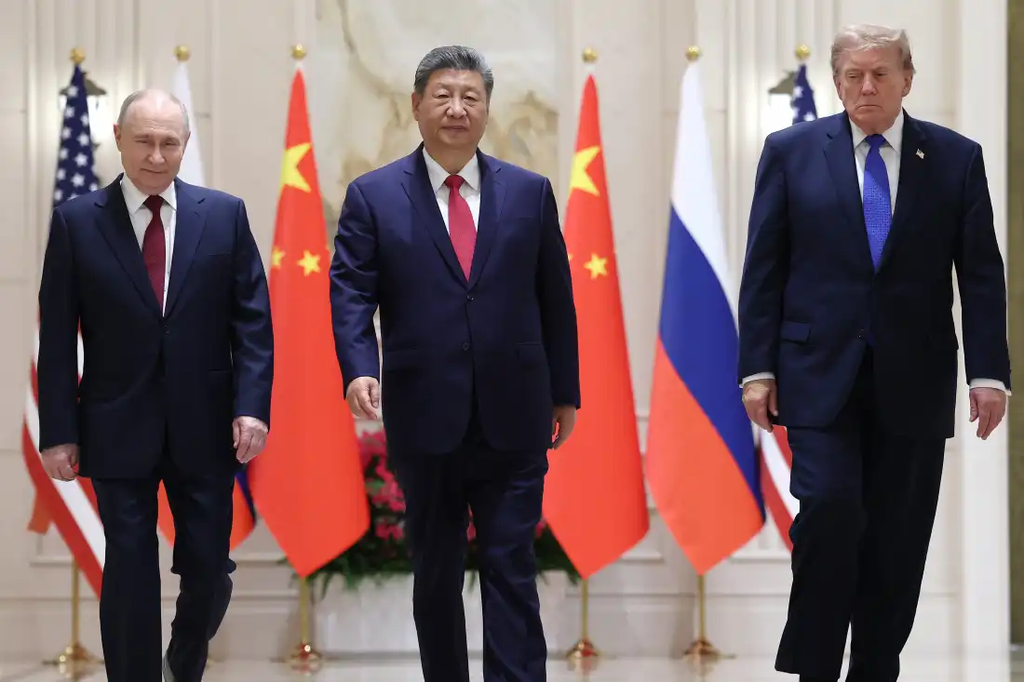
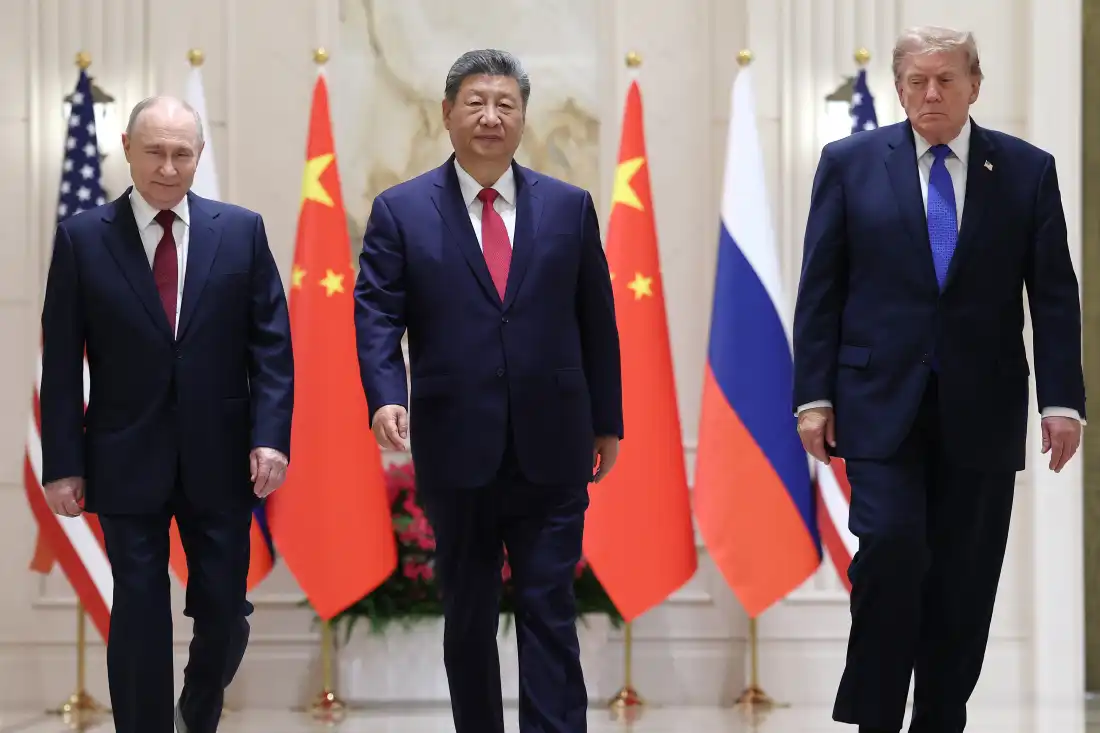
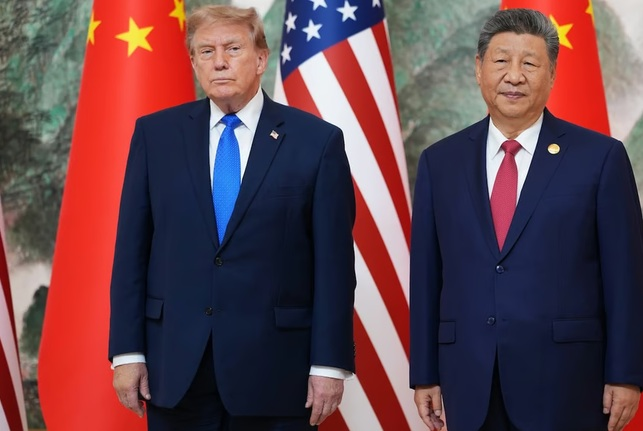
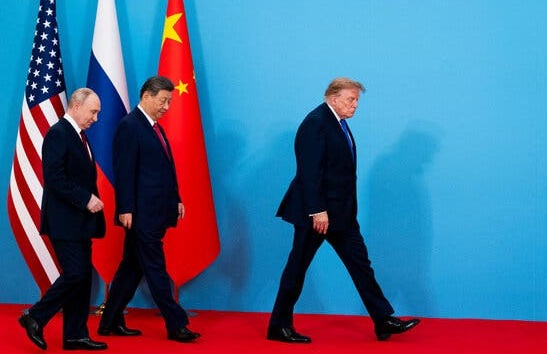
The meeting between Donald Trump, Vladimir Putin, and Xi Jinping in Shenzhen, China, on November 19, 2026, may prove more significant for what is to follow than for what was officially announced.
The sight of the leaders of the three most powerful nuclear states gathered around the same table—hosted by Xi Jinping—carried, in itself, considerable geopolitical weight.
Even more significant, however, is their decision to issue an extremely brief joint declaration, limited to four points and devoid of any timelines, implementation mechanisms, or clear commitments.
The summit, which took place on the sidelines of the APEC forum, has already drawn comparisons to a new “Yalta”—alluding to the 1945 conference where the great powers sought to shape the post-war order.
While this historical analogy is compelling, it should be approached with caution. No agreement to redistribute spheres of influence emerged in Shenzhen, nor was there any binding plan for international security.
What did emerge was the political will among three competing power centers to engage in direct dialogue on issues that affect the entire planet. This is potentially the first step toward a new form of managing international competition—one in which confrontation is not eliminated, but rather acquires channels for communication and certain common rules.
The Day After: Cooperation Without Strategic Trust
The defining characteristic of this trilateral engagement is that the participants are not abandoning their strategic objectives.
On the contrary, they seek to establish a framework within which they can pursue these objectives without necessarily spiraling into unbridled conflict.
- For Washington,
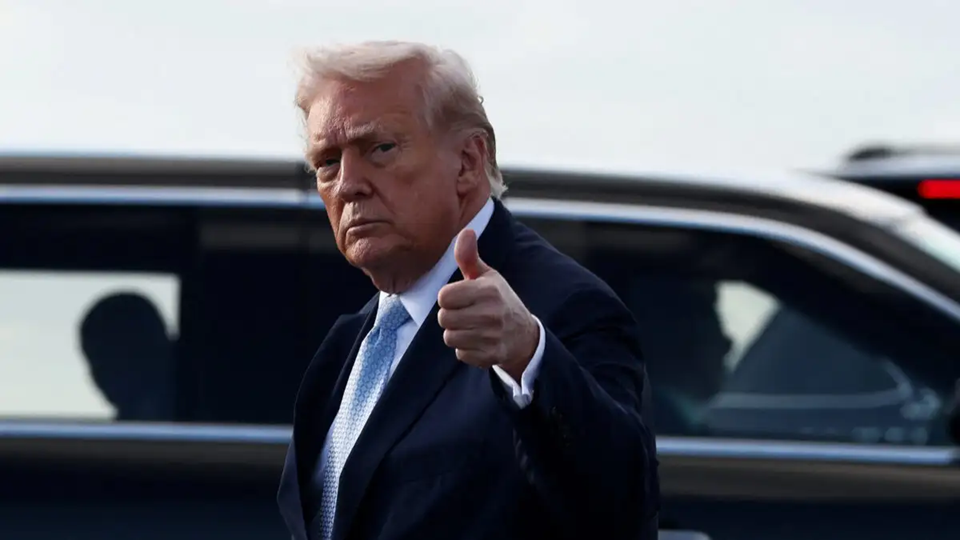
the summit offers Donald Trump the opportunity to present himself as a leader who is restoring personal diplomacy at the highest level.
At the same time, it allows him to keep channels open with both Moscow and Beijing, thereby avoiding—to the extent possible—the full consolidation of his two rivals into a unified anti-Western front.
- For Moscow,
Vladimir Putin’s presence at the same table as the leaders of the United States and China represents a significant diplomatic elevation.
It reaffirms that, despite sanctions and the conflict in Ukraine, Russia remains an essential interlocutor on matters of strategic security.
- For Beijing,
the political gain is even greater. Xi Jinping appears not merely as the representative of a rising superpower, but as a host and a potential architect of a new international framework. In this way, China stakes a claim to a central role in managing global stability, without needing to retreat from its critical strategic positions.
Herein lies the first significant observation regarding the period ahead: the trilateral arrangement does not signal a convergence of interests, but rather an acknowledgment of the interdependence among the three powers.
UN: The debate on reform masks a battle for influence
The first point of the joint declaration addresses the need for UN reform, with the aim of enabling the organization to respond more effectively to international challenges. Beneath this general phrasing, however, lie deep-seated disagreements.
- The US has advocated for greater representation for countries such as India, Japan, and Germany.
- Russia is more favorably disposed toward the prospect of an elevated status for India and Brazil, but opposes the inclusion of Germany and Japan as permanent members.
- China maintains its own reservations, particularly regarding Japan and India.
None of these three powers has committed to relinquishing its veto power.
Consequently, the debate on UN reform is more likely to evolve into a protracted negotiation over the composition and political direction of the Security Council, rather than resulting in an immediate institutional restructuring.
Energy: The First Area for Potential Practical Agreements
The second point of the declaration—which concerns increasing the production and supply of refined petroleum products and ensuring stable energy flows—may prove to be the most immediately actionable.
However, the three countries approach the issue from different starting points.
- Russia is primarily interested in reducing obstacles to its energy exports. Sanctions, restrictions on oil transport, and price-cap mechanisms hinder its ability to fully leverage its energy reserves.
- The US seeks to strengthen its own presence in international markets and maintain its influence over energy flows.
- China, by contrast—as a major energy importer—has a primary interest in securing sufficient supplies, predictable prices, and safe maritime transport routes.
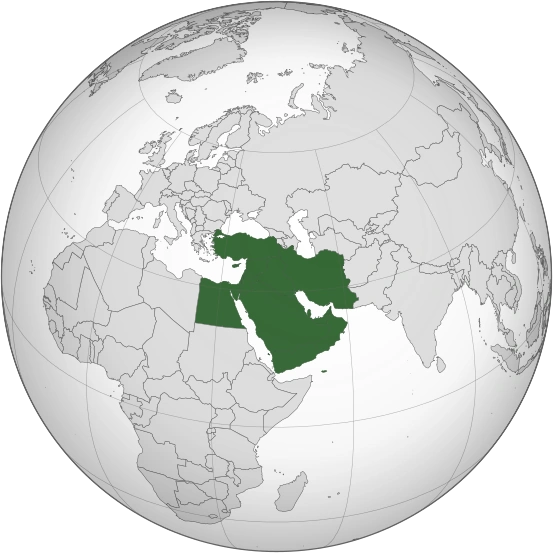
Their shared interest lies in avoiding a generalized energy crisis, particularly amid instability in the Persian Gulf. The next phase will reveal whether this general commitment can be translated into concrete arrangements regarding exports, shipping, sanctions, or the normalization of international energy markets.
In particular, it will be significant whether steps are taken to facilitate Russian energy flows or to reduce the likelihood of further disruptions to oil shipments from the Middle East.
At present, there is no public agreement to this effect. Nevertheless, the energy sector could prove to be the area where this trilateral understanding yields, for the first time, tangible economic results.
Europe Faces the Risk of Strategic Marginalization
The trilateral arrangement sends a particularly concerning message to European capitals. The European Union was not at the table, even though several of the issues discussed directly affect its security, economy, and international standing.
Even more sensitive is the fact that Ukraine—whose future is a central issue for European security—was not represented at a meeting where the conflict was a subject of prior engagement.
The greatest risk for Europe is not necessarily the formation of a formal trilateral alliance. Such an outcome would be extremely difficult to achieve, given the rivalry between the US and China, as well as the divergent interests of the parties involved.
The danger lies in the gradual emergence of an informal practice whereby major decisions regarding international security are prepared through direct negotiations among the most powerful states, leaving other stakeholders to react only after the fact.
This could intensify pressure for greater European strategic autonomy, the more rapid development of defense capabilities, and a more coherent foreign policy. At the same time, Japan, Taiwan, and other U.S. partners in Asia will be watching closely to see whether Washington’s rapprochement with Beijing leads to any substantive changes in American security guarantees.
China’s diplomatic elevation does not automatically signify a U.S. retreat in Asia. It does, however, increase uncertainty regarding how the American leadership will attempt to balance deterrence with negotiation.
Three Scenarios for a New International Balance
Following the Shenzhen summit, three primary possibilities emerge.
1. The first scenario is the gradual institutionalization of trilateral communication
In this scenario, the three nations would maintain their existing rivalries but establish crisis-management mechanisms—specifically regarding nuclear issues, energy, and international security. This could lead to a more predictable, though not necessarily fairer, international order.
2. The second scenario is selective engagement
The leaders would utilize the trilateral framework only when it serves specific interests, without seeking a comprehensive understanding. This could result in targeted compromises—for instance, in the realms of energy or arms control—while commercial, technological, and geopolitical competition continues.
3. The third scenario is a return to intense confrontation
Should the discussions fail to yield tangible results, or if a major crisis erupts in Ukraine, Taiwan, or the Middle East, the political momentum generated by the summit could quickly dissipate.
For the time being, the second scenario appears to be the most realistic. The differences between the three powers are too great to allow for a comprehensive strategic agreement, yet the cost of an uncontrolled conflict is also far too high to be ignored.
The real stake: Who will write the rules for the coming era?
The Shenzhen summit did not usher in a stable multipolar order. It neither secured peace on major battlefronts nor established binding mechanisms for nuclear arms control.
It did, however, confirm a significant shift: the three powers acknowledge that their mutual confrontation cannot be managed solely through sanctions, military deterrence, and competing alliances.
This does not amount to an abandonment of power politics. On the contrary, it may signal a transition toward a new form, in which the most powerful actors seek to jointly define certain limits to their rivalry.
Comparing this to Yalta, therefore, serves more as a cautionary note than as a description of a comprehensive agreement.
History does not repeat itself in the exact same terms, yet the question of how smaller states participate in shaping the international order remains highly relevant.
The period immediately ahead will be critical. The establishment of stable communication channels, potential changes to energy-related sanctions, the resumption of substantive nuclear negotiations, and developments concerning Ukraine and Iran will serve as the true benchmarks for evaluating the summit.
If there is follow-through in these areas, Shenzhen could be marked as the starting point for a new process of strategic understanding.
If not, it will remain an impressive yet limited diplomatic moment.
Ultimately, the decisive question is not whether Donald Trump, Vladimir Putin, and Xi Jinping can reach an agreement among themselves.
Rather, it is whether they can manage their rivalry without turning the security and sovereignty of other states into bargaining chips.
The aftermath of Shenzhen will hinge precisely on this: the fine line between an understanding that prevents global conflict and an understanding that allows the most powerful nations to unilaterally dictate the rules of the world order.
