The scale of the Republican defeat in the midterm elections on November 3rd exceeded expectations and upended political dynamics that had been considered virtually immutable.
The aftermath of the U.S. midterm elections opens a new chapter of political realignment, with focus shifting from the electoral contest itself to the formation of new power dynamics—and, most significantly, to the future of the Republican Party.
The loss of control over Congress creates a new reality for Donald Trump, while within the Republican ranks, a difficult conversation is beginning to take shape regarding who will represent the party in the post-Trump era.
The central question now is whether “Trumpism” can maintain its political and electoral influence without its founder’s personal presence in the presidency.
At the same time, the Democrats are tasked with leveraging their new parliamentary position to forge a unified political agenda—a challenge, given that their electoral success has not erased the significant ideological and strategic divisions within their own ranks.
The Republican Succession Crisis and Potential Successors
For the Republican Party, the most significant challenge concerns the period following Donald Trump’s political dominance.
His personal influence remains a decisive factor for the party; however, recent developments have brought the issue of succession—and the question of whether the electoral coalition built over the past few years can be sustained—back to the forefront.
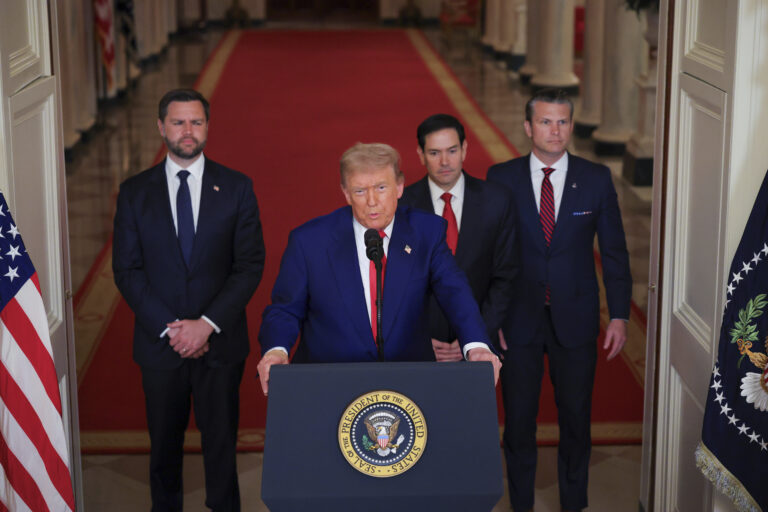
At the center of this discussion is Vice President J.D. Vance, who represents the nationalist and populist wing of the Republican Party.
His political identity is tied to protectionism, strict immigration policy, and social conservatism—elements that serve as the core pillars of “Trumpism.”
Another figure in the spotlight is Secretary of State Marco Rubio. He hails from a different tradition of American conservatism, placing greater emphasis on the Republican Party’s traditional approach to foreign policy, though he has, to a significant extent, aligned himself with Trump’s policy choices.
His presence offers an alternative political reference point for the future of the party. Meanwhile, Florida Governor Ron DeSantis remains one of the figures who have sought to craft a political identity akin to “Trumpism”—yet one less dependent on the personal presence of the American president.
The discussion, therefore, is not limited to identifying an individual who might vie for the presidential nomination in 2028.
It centers, rather, on whether the Republicans will continue along the same political trajectory or attempt to redefine their character—while simultaneously retaining the electoral base that Trump assembled.
Economic Promises and the Future of Trumpism
A decisive issue for the future trajectory of the Republican Party is the credibility of Trump’s economic pledges.
His policy was largely built on the promise to protect American workers from the consequences of globalization, to bolster domestic production, and to restore the purchasing power of households.
However, persistent high prices, tariffs, and the economic repercussions of a war with Iran have cast doubt on the effectiveness of this strategy.
The discontent expressed at the ballot box was not confined to traditional Democratic strongholds; it also extended to social groups that had contributed to Trump’s return to the White House.
The challenge for the Republicans is that the electoral coalition formed around the American president does not appear to have established firm, lasting ties with the party itself.
The ability to mobilize voters around Trump’s personality does not necessarily translate into equivalent support for other candidates.
This creates a difficult dilemma for the party’s leadership. If they move away from Trump’s policies, they risk alienating a significant portion of their electoral base.
If, on the other hand, they continue without making any changes, they will have to face the consequences of the choices that contributed to their electoral setback.
Democrats Face Their Own Internal Battle
At the same time, the new political reality creates significant opportunities—as well as internal challenges—for the Democrats.
Regaining a majority in both the House of Representatives and the Senate gives them the ability to block key administration initiatives and strengthen parliamentary oversight of the Trump administration.
However, this success is not accompanied by a unified vision regarding the political direction they should pursue.
The various electoral victories have highlighted two primary tendencies: on one hand, the progressive wing, which calls for deeper social and economic changes; and on the other, the moderates, who seek broader political alliances.
Abdul El-Sayed’s victory in Michigan has bolstered the progressive side, as his campaign focused on public healthcare, economic inequality, and curbing the influence of big money in politics.
Similarly, Sherrod Brown’s return to the Senate, following his victory in Ohio, has brought back to the forefront a political approach that emphasizes labor unions, industrial work, and the protection of regions affected by deindustrialization.
Conversely, the victory of former Governor Roy Cooper in North Carolina has confirmed the electoral appeal of a more moderate approach.
These varied successes fuel the debate over which strategy the party should pursue ahead of the next major political contests.
2028 and the Candidates Shaping the New Political Landscape
Discussions about the future are already focused on the 2028 presidential election. Within the Democratic Party, several figures are strengthening their standing and gaining greater political weight, setting the stage for a new internal contest.
Governors Josh Shapiro of Pennsylvania and Wes Moore of Maryland, along with California Governor Gavin Newsom, are among those at the center of conversations regarding the future leadership of the Democratic Party.
At the same time, the progressive wing is expanding its influence, led by prominent figures such as Bernie Sanders, Alexandria Ocasio-Cortez, and New York City Mayor Zoran Madani.
The strengthening of this trend is expected to shape the debate surrounding the taxation of large fortunes, healthcare, and social inequality. Meanwhile, Chuck Schumer and Hakeem Jeffries maintain significant roles within the party apparatus—the former returning to the leadership of the Senate majority, and the latter positioned to assume the role of Speaker of the House of Representatives.
The fact that various political tendencies have gained strength simultaneously leaves the discussion regarding the direction the Democrats will choose to take wide open.
The challenge for their leadership lies in transforming this electoral success into a coherent governing agenda, rather than merely a temporary alliance against Trump.
The Aftermath and the Big Question for American Politics
The new parliamentary reality creates a different environment for the Trump administration. Democrats gain the ability to exercise greater oversight, while Republicans must manage their internal divisions and prepare for the transition to the next political era.
Despite these new circumstances, there is no indication yet that Trump has lost control of his party. His personal influence remains strong, and aspiring successors still weigh his stance before shaping their own political strategies.
The critical question is whether this new phase will merely signal a search for a new leader, or whether it will lead to a broader reassessment of the political identity of both major parties.
For the Republicans, the challenge lies in maintaining the electoral coalition of “Trumpism” without being exclusively dependent on Trump himself.
For the Democrats, the challenge is to demonstrate that they possess a distinct political agenda capable of addressing the economic and social needs of the American people.
The battle for 2028 has effectively begun, with the future of Trumpism, the succession of Republican leadership, and the internal balance within the Democratic Party shaping the new political landscape in the United States.