
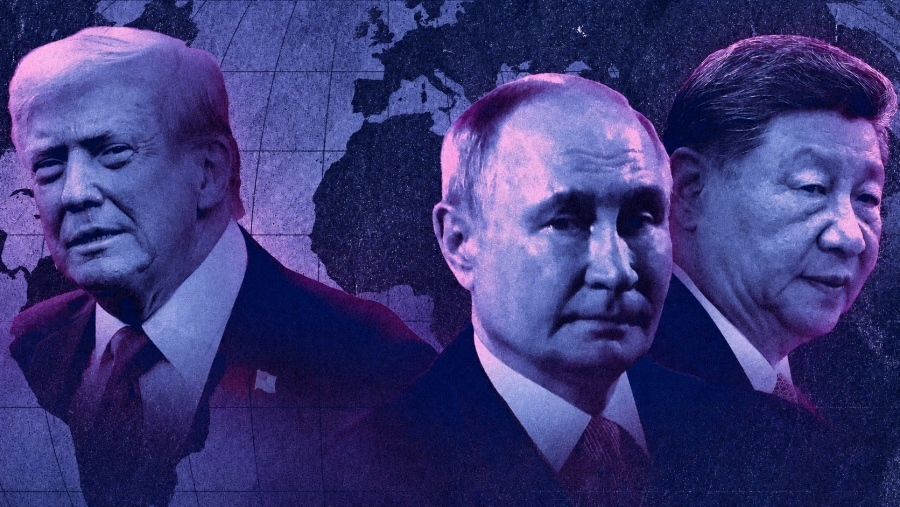
The imminent signing of the commercial contract for the “Sila Baikala” pipeline is not merely a bilateral economic agreement; it represents a turning point for the geopolitical architecture of the 21st century.
Moscow’s decision to definitively channel the massive reserves of Western Siberia toward the East puts an end to Western illusions regarding Russia’s potential collapse—and, crucially, it redirects LNG supplies away from Europe and toward the East!
This development alone should prompt serious reflection in Europe, as it carries four major implications for the continent’s future trajectory:
- the prospect of Russia’s economic ruin and isolation has definitively collapsed;
- the agreement condemns Europe to permanent industrial decline due to high gas prices;
- it permanently strips Ukraine of its leverage regarding transit infrastructure; and,
- it leaves the United States facing a solid, unified Eurasian front.
At the same time, this realignment reshapes the balance of power in the Middle East—diminishing Iran’s bargaining leverage—while freeing the Chinese economy from its dependence on vulnerable maritime routes.
The strategy of patience has paid off for the Kremlin
Despite China’s strong negotiating position—and the temptation to strike a geopolitical blow against the West—Moscow opted for a long-term, wait-and-see approach, prioritizing substantive economic gain over mere grandstanding.
This patience has been vindicated, as the “rosy” forecasts of cheap gas were shattered by a global crisis, in which prices are spiraling upward with no end in sight.
At the same time, warnings that the U.S. could, at any moment, cut off China’s access to energy resources have ceased to seem like mere science fiction.
The collapse of international law and the sabotage of the pipelines have changed the rules of the game
Developments in the energy sector that were once considered unthinkable have now become the new normal. Western nations—which boast of upholding private property rights and justice—have gone so far as to blow up pipelines and seize infrastructure based solely on the national origin of the owners. The Nord Stream pipelines were destroyed, Poland appropriated Gazprom’s stake in the Yamal–Europe pipeline, and even Germany nationalized Russian assets.
At the same time, the EU has already frozen hundreds of billions of euros from Russia’s gold and foreign exchange reserves.
Europe buckles while China fortifies itself through Russia
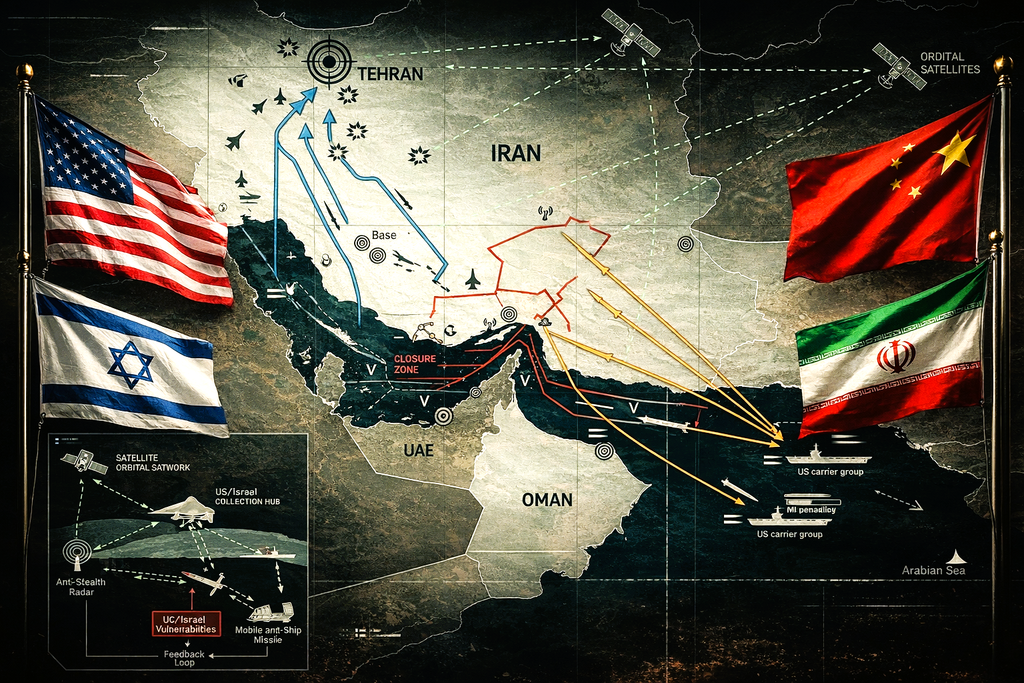
For decades, Iran’s threats to close the Strait of Hormuz were dismissed by analysts and policymakers as a desperate bluff—a move that would deprive Iran itself of its own export revenues. Today, however, the world is witnessing this very “impossible” scenario unfold.
The prospect of the U.S. employing a total maritime blockade on hydrocarbon shipments to China—at the height of its confrontation with Beijing—now appears as an immediate and tangible risk.
The U.S. could achieve this objective either directly or through collateral crises—such as the current flare-up with Iran, which has plunged Europe into a deep crisis and even threatens the cohesion of the EU.
In contrast, China is absorbing these shocks far more easily, precisely because it is steadily increasing its imports of Russian energy—via pipelines, as well as maritime and overland routes—at a time when Europe has rejected almost all Russian hydrocarbons.
Land-based pipelines represent the only guarantee of survival for the Chinese economy
The conflict surrounding Iran has exposed the alarming vulnerability of maritime transport, as fuel prices, freight rates, and insurance premiums are unlikely to return to pre-March 2026 levels for a long time.
Faced with the nightmare of being completely cut off from maritime arteries, the risk of China becoming increasingly dependent on Russia—due to the “Sila Baikala” pipeline—appears negligible.
For Beijing, reaching an agreement with Moscow is far safer and more advantageous than relying on sea routes controlled by its geopolitical rivals; furthermore, it aligns with its strategy of diversifying energy-related risks.
The geopolitical architecture of “Sila Baikala” (formerly “Sila Sibiri 2”) and the end of Western illusions
The announcement of a specific timeline for the signing of the commercial agreement for the “Sila Baikala” pipeline—which has an annual capacity of 50 billion cubic meters—marks a tectonic shift in the global energy and geopolitical landscape. The renaming of the project by Vladimir Putin, alongside the internal interconnection of Siberia, is not merely a public relations tactic; rather, it formalizes a structural realignment that transforms the Eurasian heartland into an impregnable energy fortress.
This development sends clear signals to all involved actors, while simultaneously exerting a decisive influence on players who often remain outside the scope of public discourse.
- Ukraine: The definitive loss of the energy “weapon”
For Kyiv, this development marks the end of an era. For decades, Ukraine relied on its status as an essential transit zone for Russian gas destined for Europe—a position that provided both financial revenue and geostrategic leverage.
By redirecting gas reserves from Western Siberia—which previously supplied Europe—directly to China, Russia has rendered Ukraine’s transport infrastructure entirely redundant. Ukraine has definitively lost any ability to use the energy factor as a source of leverage in future negotiations.
- Europe: The institutionalization of… permanent high costs
The European Union now finds itself trapped in a new reality. The illusion that the decoupling from Russian gas was merely a temporary measure—one that could be reversed in the post-war period—has collapsed.
The gas volumes that once fueled German and European industry are now secured by Beijing through 30-year contracts. Europe is condemned to a permanent dependence on expensive American LNG and on volatile suppliers from the Middle East—a situation that accelerates the deindustrialization of the Old Continent and weakens its international competitiveness.
- USA: Washington’s Geopolitical Paradox
For the United States, this arrangement is a double-edged sword. On one hand, American energy companies are reaping massive profits by filling the void in the European market.
On the other hand, American strategy has achieved the exact opposite of its long-standing objective: rather than isolating China or Russia, it has driven these two superpowers into an organic, rigid alliance.
China is securing its energy supply via overland routes that cannot be blocked by the U.S. Navy, thereby neutralizing the United States’ most potent geostrategic trump card.
- Middle East: A Catalytic Effect
The “Sila Baikala” (Power of Siberia) agreement has a catalytic effect on the Middle East, redefining China’s relations with both Iran and the Arab monarchies of the Persian Gulf.
Linking this Eurasian pipeline to the geopolitical balance in the Middle East reveals why Beijing is in such a hurry to finalize the deal with Moscow:
a. Iran loses its bargaining leverage over Beijing
Iran had hoped that its isolation from the West would make it China’s sole and indispensable energy partner. However, this development shifts the dynamics…
- Reduced dependence on Iranian gas/oil
Securing vast quantities of Russian gas via overland routes diminishes China’s need to invest in precarious Iranian infrastructure. - Diminished bargaining power for Tehran
Beijing can now demand even steeper discounts on Iranian oil; Iran lacks alternative buyers, whereas China now has access to alternative suppliers. – Political downgrading
Although Iran remains an important partner within the BRICS framework and the “Belt and Road” initiative, its economic dependence on China is becoming total and one-sided.
b. Bypassing the “Strait of Hormuz Nightmare”
More than 30% of China’s oil and gas imports pass through the Middle East—specifically, through the Strait of Hormuz.
Persistent tensions between Iran, Israel, and the US—compounded by Tehran’s threat to close the Strait in the event of a full-scale war—have been the Chinese leadership’s greatest headache.
With the “Power of Siberia” (Sila Baikala) pipeline, China is replacing risky Middle Eastern maritime routes with a completely secure, land-based pipeline that traverses Russia and Mongolia—far removed from American warships and Middle Eastern conflicts.
c. Shifting Balances with the Arab Monarchies (Qatar, Saudi Arabia, the UAE)
The agreement reshapes China’s relations with the Arab energy giants:
- Pressure on Qatar: Qatar—one of China’s largest suppliers of liquefied natural gas (LNG)—sees its market share in Asia threatened by cheaper Russian pipeline gas.
- Flexibility vis-à-vis Riyadh: China is under no obligation to yield to pressure from Saudi Arabia or the UAE. It maintains commercial ties with them, but from a position of strength—fully aware that its energy heart now beats in Siberia.
d. China’s freedom to play the role of “peacemaker” in the Middle East
Freed from the immediate fear of an energy strangulation in the event of a crisis in the Middle East, China can now conduct diplomacy without putting its own industrial base at risk:
- It can maintain a neutral stance in the Israel-Iran conflict or the Saudi Arabia-Iran dispute.
- It can position itself as a diplomatic mediator (as it did with the Riyadh-Tehran rapprochement agreement), since its economic survival no longer depends on the continued flow of oil and gas from the Persian Gulf.
The “Power of Siberia” (Sila Baikala) pipeline decouples China’s military and industrial apparatus from the “powder keg” of the Middle East. Iran is transformed from a critical energy partner into a secondary, dependent player, while the West definitively loses the ability to “blackmail” China by inciting unrest or imposing naval blockades along Middle Eastern maritime routes.
Benefits for “Unsung” Protagonists
Mongolia: The Ultimate Winner in Transit Mongolia—through which the pipeline (the “Soyuz Vostok” project) will pass—is transforming from an isolated, landlocked state into a critical Eurasian hub.
It stands to gain enormous revenue from transit fees, access to affordable gas, and, most importantly, a political “protective umbrella,” as it becomes indispensable to both Moscow and Beijing.
India and Southeast Asia (ASEAN): Russia’s decisive pivot toward China is causing unease in New Delhi. Although India maintains friendly relations with Moscow, it sees its primary supplier of military equipment and energy becoming closely aligned with its greatest regional rival.
Meanwhile, the nations of Southeast Asia observe China securing a vast, low-cost energy supply—a development poised to make Chinese industry even more formidable against its Asian neighbors.
Iran and Asian Producers (Qatar, Turkmenistan):
Turkmenistan, which until now has met a large portion of China’s gas requirements, is losing its bargaining power vis-à-vis Beijing.
At the same time, Russia is consolidating its dominant position in the Asian market, limiting the scope for future expansion by Iran—a country that had also hoped to supply the Chinese economy.
The “nightmare of a total energy blockade”—fostered by the West in the South China Sea and the Strait of Malacca, and now compounded by American maneuvers in the Strait of Hormuz—has produced the exact opposite of the intended outcome:
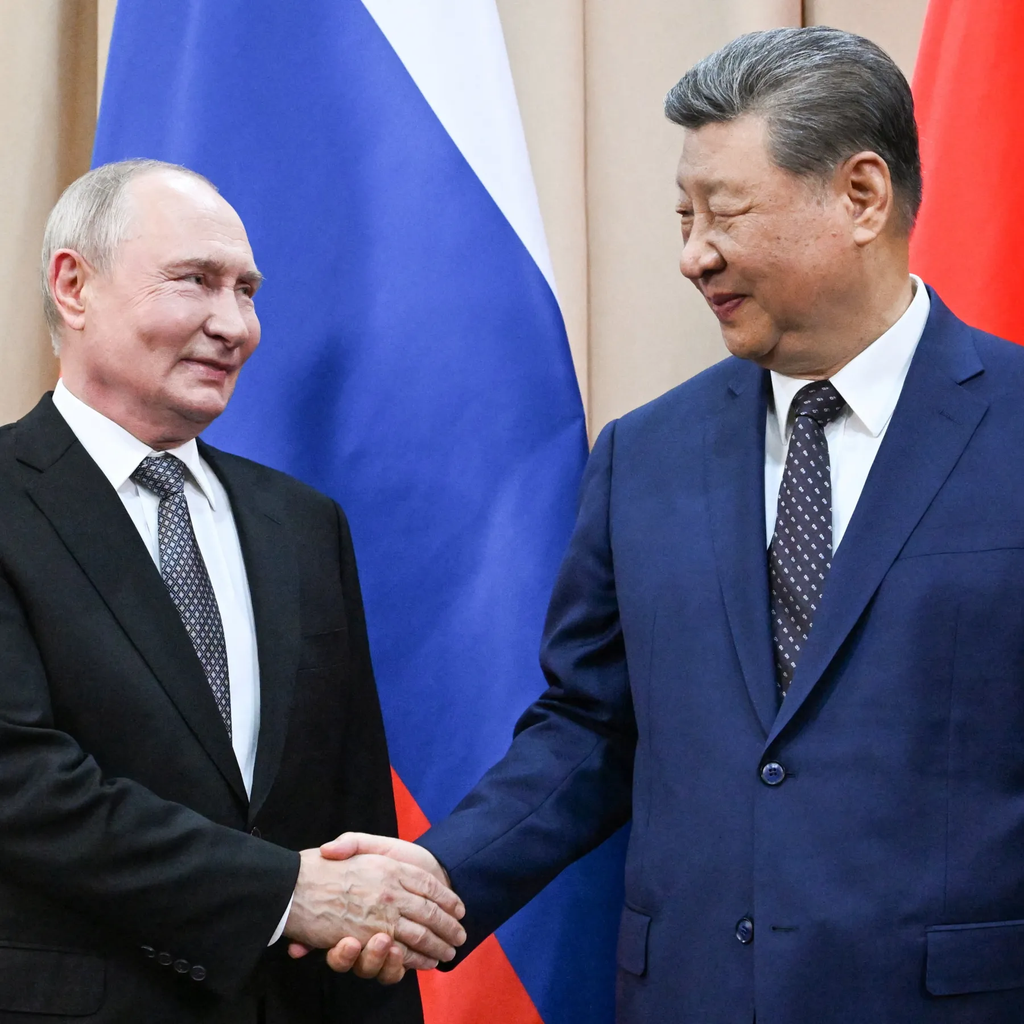
it has compelled Beijing to enter into an energy compromise. Yet, the “Power of Siberia” (Sila Baikala) agreement is more than a mere commercial contract; it serves as the cement sealing the Eurasian axis, leaving Europe “energy-orphaned” and the United States facing a bloc that can no longer be fractured.
