


Water: The Non-Negotiable Elixir of Life
The history of water has been an integral part of the history of Humanity long before it became the subject of geopolitical and strategic analysis. Water is the biological prerequisite of our existence. On a biological level, water constitutes approximately 60-70% of the human body, it functions as the main carrier, dissolving and transporting nutrients and oxygen to the cells, while it is essential for thermoregulation and the elimination of toxins.
This biological proportion of the body is reflected in the planetary proportion, as water covers approximately 71% of the Earth’s surface. In the same way that water feeds cells, water arteries (seas, rivers, canals, lakes) have functioned throughout time as the potential carrier of civilization and power. Through these planetary arteries, products and goods, political ideas and culture were transported to every corner of the global “organization”.
At the cultural level, access to this resource was at the core of the beginning, organization and evolution of the first humans into modern states and megacities. The great ancient civilizations, such as the Sumerians and Babylonians in Mesopotamia (Tigris and Euphrates), and Pharaonic Egypt (Nile), were founded around river systems, where water management was primarily a matter of irrigation and internal control. As early as the 3rd millennium BC (Old Kingdom periods in Egypt and Sumer), the organization of early states was based on the ability to carry out large irrigation projects—an early manifestation of Hydrostatic Power.
Similarly, Greek civilization developed around the Aegean, Ionian and Mediterranean Seas, with the first organized maritime activities dating back to the Early Helladic/Minoan and Mycenaean periods (Late Helladic period, 3200-1100 BC). During the Archaic and Classical periods (800-400 BC), the transformation of the sea from a boundary to a route of communication, trade and geopolitical expansion established the principles of Hydrodynamic Power.
The ability to manage water – whether for irrigation or navigation and defense – transformed from a practical necessity into a political power. Today, this management has evolved into the Hydro-Strategic Model, a comprehensive framework that links water security with national sovereignty and economic development.
The Conceptual Framework: The Hydro-Strategic Model
The Hydro-Strategic Model (HSM), as a high-level strategy model, describes the cycle through which a state transforms water constraints and threats into lasting geopolitical superiority. The operation of the model is distinguished by the dual axis of management:
- internal control (Hydrostatic Power) and
- external control (Hydrodynamic Power).
1. Hydrographic Reading
The first phase involves the accurate diagnosis of water threats and resources. In the context of Hydrostatic Power, this translates into the diagnosis of freshwater reserves, water scarcity problems, as well as irrigation and flood protection needs of rivers. In contrast, for Hydrodynamic Power, the reading focuses on the diagnosis of critical sea lanes, the assessment of geopolitical threats to the maritime environment, and the fundamental necessity of navigation.
2. Hydraulic Visioning
This phase concerns long-term political planning for the transformation of the environment. Regarding Hydrostatic Power, visioning includes the design of large-scale projects (dams, reservoirs, desalination plants) with the aim of achieving self-sufficiency and internal Order. In the axis of Hydrodynamic Power, visioning focuses on the design of naval power (fleet, technology, bases) and maritime economic expansion (merchant shipping, coastal infrastructure, tourism), with the ultimate goal of achieving dominance and expansion.
3. Hydraulic Power
The third phase represents the technical capacity and applied engineering to execute the projects. For Hydrostatic Power, this is the implementation of projects (such as the Dutch polders or desalination plants) that guarantee the stability of the land. Correspondingly, in Hydrodynamic Power, this phase is expressed through shipbuilding capacity, personnel training and the enforcement of control and defense in the marine environment, as well as through the organization of the commercial, tourist and fishing fleet.
4. Feedback Flow
The last phase ensures the continuous evaluation and readjustment of the vision. In the case of Hydrostatic Power, it includes the continuous evaluation of the performance of water systems and the immediate response to climatic or anthropogenic changes. On the Hydrodynamic Power side, the feedback flow concerns the assessment of the strength of the war and merchant fleet, the readjustment of naval strategy, and the modernization of defense means and technologies.
Implementation: Global Strategy Patterns
The application of the Hydro-Strategic Model (HSM) to model states highlights two main strategic approaches, which correspond to the state’s emphasis on internal or external control of water:
1. “Resource Creation” (Hydrostatic Power) Pattern: Israel and Singapore
Faced with geographical water scarcity, these countries adopted a strategy of technological independence, strengthening their Hydrostatic Power. Israel transformed Water Security into Water Autonomy. Through massive investments in desalination technologies and pioneering wastewater recycling systems, it secured a water surplus. Its strategy decoupled national development from regional, often contested, natural resources.
Singapore’s strategy is based on the principle of the “Four Taps”: imported water, local reservoirs, recycled water (NEWater) and desalination. Singapore is the model of Integrated Urban Water Management where every drop of water is treated as a critical, strategic resource, enhancing its internal Order and stability.
2. “Control & Defense” Model (Hydrostatic & Hydrodynamic Power): Netherlands
The Netherlands faces the opposite problem: the risk of flooding and invasion by the sea, as much of the country is below its surface. The Netherlands’ response has the following elements:
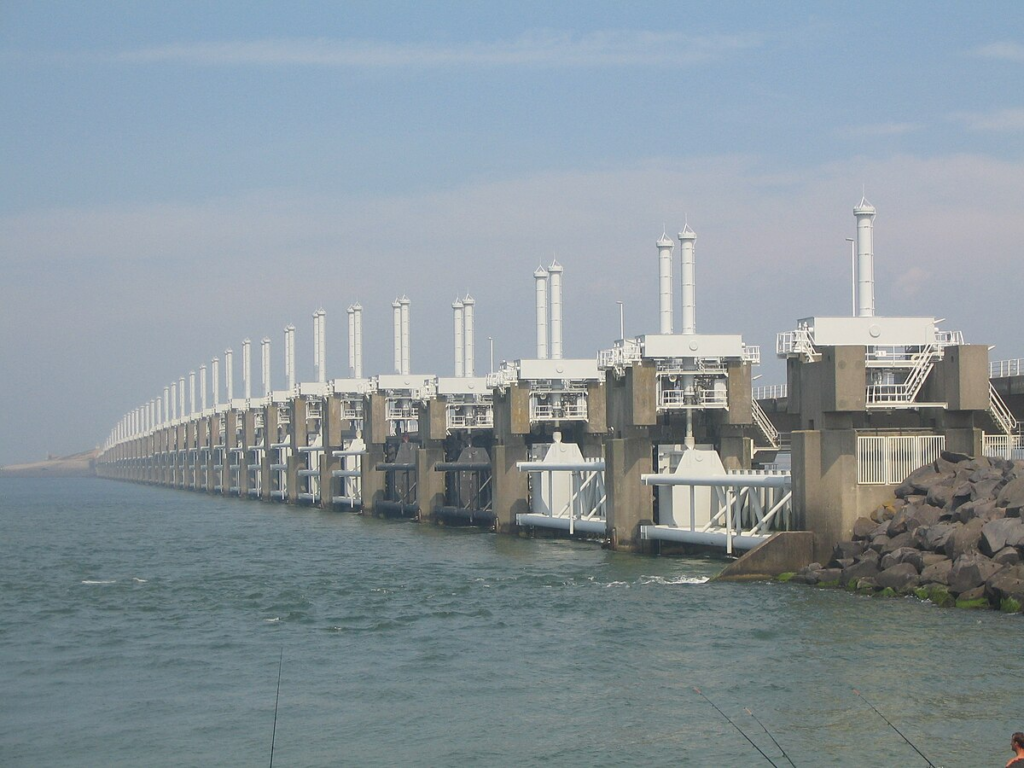
Strategic Battle with the Sea (Hydrostatic Defense): The Dutch strategy is a long-term mechanical battle. The Delta Works project (the largest flood control projects in the world) and the philosophy of “Room for the River” demonstrate how defense against water bodies determines national spatial planning and survival strategy, constituting the top application of Hydrostatic Defense.
Economic Expansion (Hydrodynamic Power): At the same time, the Netherlands uses the sea for its economic superiority. The management of the merchant fleet, the operation of the port of Rotterdam (Europort) and the organized exploitation of coastal zones for activities such as tourism, constitute the dynamic side of its strategy, manifesting Hydrodynamic Power.
3. “Tourism Hydrodynamics” Model (Hydrodynamic Power): Cyprus, Greece, Spain and Italy
This model highlights tourism and broader Blue Growth as the primary manifestation of Hydrodynamic Power for coastal and island states.
Mediterranean Model (Greece, Spain, Italy and Cyprus): Countries with extensive coastal coastlines and strong dependence on the sea for their GDP. Here, the central strategic mission is the organized development of coastal infrastructure (ports, marinas, cruise zones) and ensuring the maritime security of tourist areas.
Survival Model (Maldives and Caribbean Islands): In these cases, Hydrodynamic Power is directly linked to Hydrostatic Defense as a matter of national survival. The strategy is a fight against climate change, where the protection of the coasts from erosion and sea level rise (Hydrostatic Defense) is inextricably linked to the preservation of the tourist product and economic liquidity (Hydrodynamic Power).
The management of the marine space for tourism, shipping and coastal economy requires the continuous affirmation of territorial sovereignty and the exclusive economic zone. Tourism is not just an economic activity, but a geopolitical indicator that confirms the control and organization of the marine space.
Conclusion: The Maritime Dimension
In conclusion, Hydro-Strategy is not only about the management of drinking water, but the overall national will to transform the water element – whether it is a shortage or a surplus – into a permanent factor of superiority. As demonstrated by global models (Israel, the Netherlands, Spain), success is based on the simultaneous application of Hydrostatic Power (internal stability) and Hydrodynamic Power (external expansion).
For a state with an extensive island territory, Hydro-Strategy is directly linked to Naval Strategy and economic sovereignty. Ensuring the water security of inhabited islands (through desalination, reservoirs, etc.) is a fundamental Hydrostatic prerequisite for maintaining the population and, by extension, territorial sovereignty.
At the same time, the protection of sea lanes and the management of the commercial and tourist fleet constitute the Hydrodynamic extension of this strategy. The organization of tourism and Blue Growth, as we saw in the “Tourism Hydrodynamics” Model, transforms the marine environment from a vulnerable boundary into a field of control and a source of national wealth. The essence of Hydro-Strategy is the holistic management of water – from the raindrop inland to the control of international maritime zones. This management determines the ability of a nation to survive, prosper and project its power in the 21st century.
Sources
- Alfred Mahan, The Influence of Sea Power Upon History, 1660-1783.
- Malin Falkenmark, Water for a Starving World
- Michael Porter, The Competitive Advantage of Nations.
- Papers/Studies on “Blue Growth” by the United Nations (UN) or the European Union (EU), with emphasis on island and coastal economies.


