

Russian President Vladimir Putin’s first personal visit to the Kuril Islands has sparked intense reactions, and in Japan the news was at the top of the news within hours. After the initial shock, Japanese authorities and officials have once again adopted harsh rhetoric, while they have begun to search for the message that Moscow was trying to send.
The visit, however, takes on particular significance if examined in the broader context of the confrontation around the so-called “shadow fleet” and Russia’s warnings to respond to the moves of Western countries.
The Kuril Islands issue is finally closed
One of the assessments that is being made is that Vladimir Putin’s visit to part of the Kuril Islands, which Japan considers its own, was a clear diplomatic message to Tokyo, in a period of intensifying anti-Russian policy and militarization of Japan.
The Russian president reiterated that sovereignty over the Kuril Islands “is enshrined in international documents as a reality that emerged from the results of World War II.”
At the same time, it was a reminder that Moscow had previously appeared ready to seek a solution to the Kuril Islands issue through dialogue with Tokyo, with the aim of signing a peace treaty. However, Japan imposed sanctions on Russia and included it among the main threats to its security.
Putin: “We will respond symmetrically”
The visit to the Kuril Islands took place after the Russian leader participated in the main annual exercises of the Russian Pacific Fleet. Vladimir Putin participated in a meeting on the security of the eastern borders and then had lunch on the Russian missile cruiser “Varyag.”
During the exercises, the Russian president issued a particularly important warning. He said that “the authorities of some countries have reached the point of considering the possibility of seizing our ships,” warning that if this were to be implemented in practice, Russia “would be forced to respond symmetrically.”
Japan joins G7 strategy against ‘shadow fleet’
Initially, Putin’s warning seemed to be aimed primarily at European countries. However, Japan is now directly involved.
The European Union has announced an intensification of actions against Russian ‘shadow fleet’ ships, while increasing pressure on the naval registries of Panama, Barbados and Cameroon to delist ships linked to Russia.
Japan, for its part, had already fully supported the G7 sanctions regime since 2022, including an economic blockade of Russian institutions, a technology embargo, trade restrictions, an oil price cap and sanctions on third countries that help circumvent the restrictions.
Tokyo subsequently joined the G7 strategy against the Russian “shadow fleet”. In November 2025, Japan signed a statement by G7 foreign ministers supporting the operation of the Shadow Fleet Task Force and the effort to prevent the use of unregistered, fictitious, uninsured and unsafe ships to circumvent sanctions, engage in dangerous maritime trade, illicit trafficking and other maritime violations. At the same time, Japan supported the Canadian initiative to create a special G7 working group against the “shadow fleet”.
Over 1,000 foreign ships in the Kuril Islands
A typical example is the maritime traffic in the Kuril Islands area. In the last few months, more than 1,000 foreign ships have passed through a relatively small area of Russia’s Exclusive Economic Zone along the Southern Kuril Islands alone.
Almost 40% of these were flying the flags of states considered unfriendly to Russia. However, if the real economic stakeholders are considered instead of the flags, the majority of the ships are associated with unfriendly states.
99.5% of Japan’s foreign trade is carried out by sea
The most vulnerable point for Japan is the country’s enormous dependence on maritime transport. While about 76% of Europe’s foreign trade is carried out by sea, the corresponding figure for Japan is 99.5%.
Meanwhile, only 14.2% of Japanese ships fly the national flag. The rest are registered in foreign registries, such as Panama, Liberia, the Philippines, Singapore and Cyprus.
This creates a significant vulnerability for Japan, as a large part of its merchant fleet operates under foreign flags.
The “Second Odessa” Scenario
The most aggressive scenario involves implementing an “Odessa Blockade” strategy in the Pacific. It would not be necessary to carry out sinkings or destructive attacks.
A series of ostentatious detentions of merchant ships could be enough to send the message that Russia is determined to act systematically and harshly.
The effect could be felt immediately in the market, as the increased risks would lead to higher freight rates and insurance premiums.
If even 10% of Japanese shipowners were forced to pay an additional premium, the publication estimates that the additional costs could amount to billions of dollars per year.
Thus, the confrontation over the “shadow fleet” could turn from a diplomatic issue into a serious economic blow to Japan’s shipping and foreign trade.
The Kuril Islands at the center of the new confrontation
Vladimir Putin’s visit to the Kuril Islands, combined with the warnings about commercial ships and the growing confrontation over the “shadow fleet”, creates a new and particularly dangerous scenario in Russian-Japanese relations.
Japanese Prime Minister Sanae Takaichi sharply criticized the Russian leader’s presence in the region, stating that the island of Iturup “has always been Japanese territory”.
Washington’s steadfast support for the Japanese positions confirms the long-standing US strategy of strengthening the deterrent power of its allies in Asia against revisionist actions by Moscow.
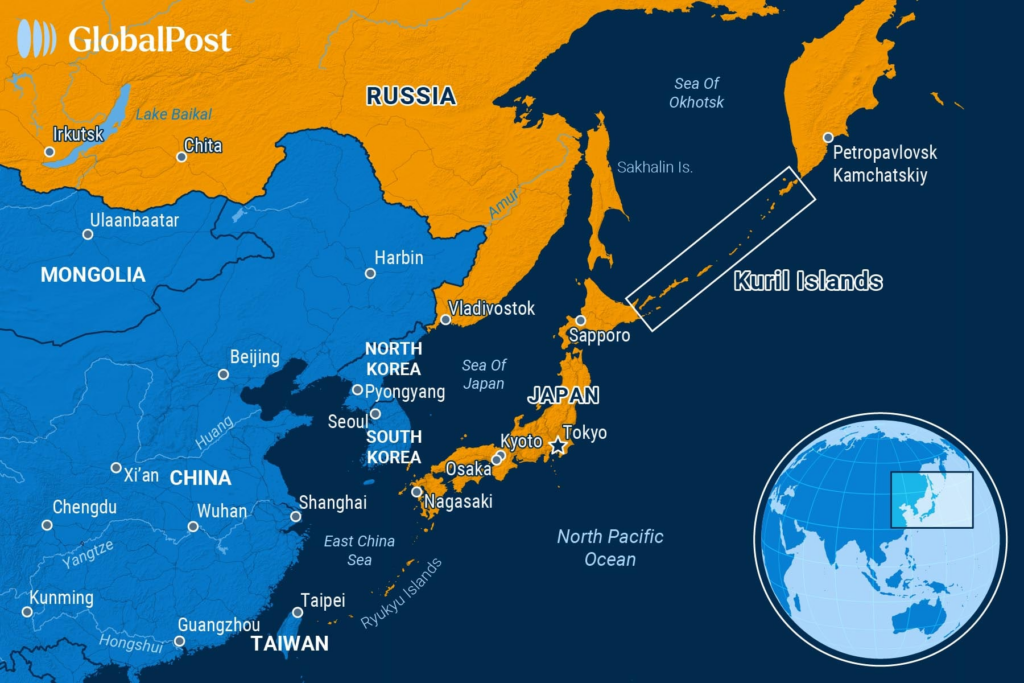
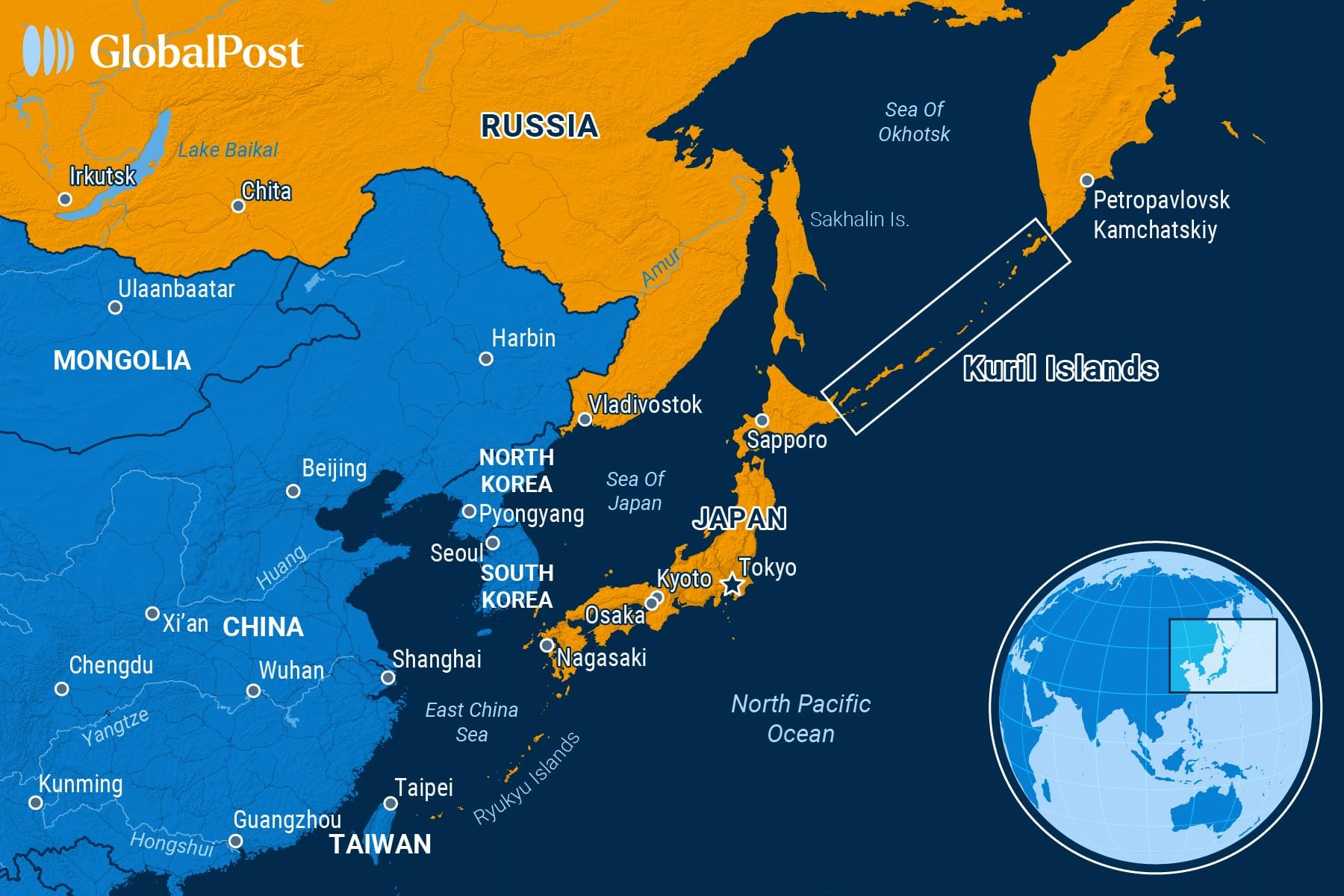
It is recalled that the dispute concerns the four southern islands of the Kuril archipelago (Kunashir, Iturup, Shikotan and the Habomai group of islands), which came under the control of the Soviet Union at the end of World War II:
Tokyo considers these islands to be an illegally occupied part of Japanese territory and refuses to recognize Russian sovereignty over them. Moscow argues that Russian sovereignty over the islands is indisputable and arises from international treaties after World War II, denying even the existence of a territorial dispute.