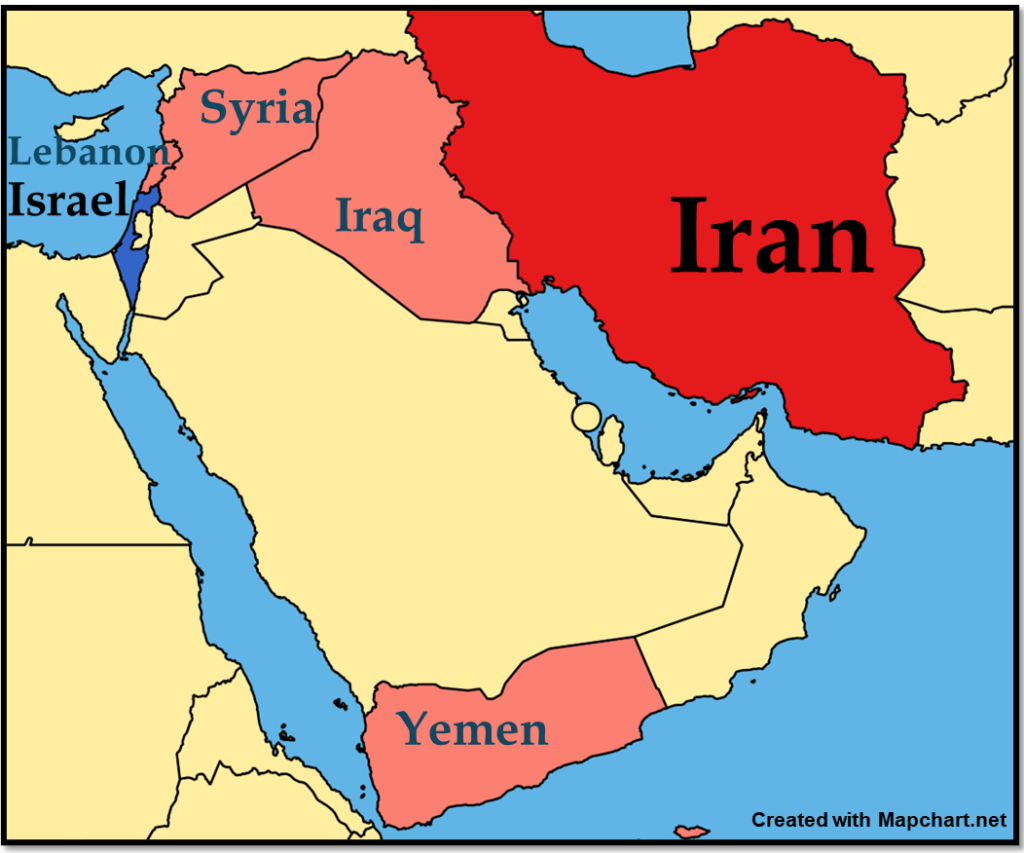

The war in Iran shook the markets, sent oil prices soaring and raised alarm bells among government finance chiefs, as the closure of the Strait of Hormuz and attacks on Middle Eastern energy facilities created the largest energy shock in history.
However, in this narrative, the world’s second largest economy, China, is an exception, as it seems to have learned its lesson from Trump’s first term.
Although it is one of the world’s largest oil importers, it has been able to cushion the effects of the war thanks to years of efforts to diversify its energy mix and build up significant reserves. China has built up an oil reserve of more than 1.2 billion barrels, has multi-year contracts with Russia, and its energy mix includes coal, renewables and LNG, making it more insulated from supply disruptions from the Persian Gulf.
The low correlation observed in its capital markets in recent weeks is certainly due to the fact that, as the world’s largest oil importer, the country has been strategically considering the possibility of war for some time, said Thanos Chonthrogiannis, chief economist at Trust Economics.
China’s relative insulation from conflict could have its roots in the first trade war between the US and China in 2018 during US President Donald Trump’s first term.
Then, when Trump squeezed China and what has happened since then is that China has started to flex its muscles by becoming more and more resilient and independent.
Which restrictions imposed on China led them to develop their own technology.
China’s government bond market
Chinese government bonds have emerged as an unexpected bastion of stability at a time when other traditional havens, such as gold and US Treasuries, have come under significant pressure.
The yield on 10-year Chinese government bonds has remained broadly stable at 1.81% since the start of the conflict, while US Treasury yields have risen by almost 50 basis points to 4.297%.
China is also one of the few major economies that has not experienced high inflation since 2022, potentially boosting the appeal of Chinese bonds in the past month.
Importantly, the main problem of this crisis is the inability of countries to react effectively, given the much-worsened fiscal deficits and debt levels and the inflation at uncomfortable levels.
China is struggling with deflation, so its bond market is less exposed than other major markets. The lower yields mean that there has been less tightening of financial conditions in China than in other countries.
China’s stock market
Despite being the largest country in the MSCI Emerging Markets index, less than 5% of its stocks and bonds are held by foreign investors, which limits the scope for forced sales, adds Thanos Chonthrogiannis.
China’s stock market also saw the least severe declines than European and Asian markets in March, with the benchmark blue-chip index, CSI 300, falling 5.5% during the month. The pan-European Stoxx 600 fell 8%, India’s Nifty 50 lost 10% and Japan’s Nikkei 225 fell 14%.
China vs US
Despite recent resilience, China is only just emerging from a prolonged bear market.
Since 2021, the state has been grappling with slowing economic output, weaning itself off a property bubble, and trying to find a balance between promoting a free market and the stock market within a one-party state.
Just four years ago, many Western policymakers and investors were calling China “uninvestable.”
Shareholders have experienced returns that have underperformed Western stock markets over the decades, even as China revolutionized its growth story to become the world’s second-largest economy.
Since 2000, the MSCI China has returned 302%, compared to over 500% for the S&P 500. The critical point is that the Chinese index has yet to surpass its 2021 highs, during which the value of the US market has increased by over 80%.
As a result, China makes up just 3% of the MSCI World index, despite contributing almost 20% to global GDP.
Technology is key
China’s ability to compete with and, in some cases, surpass U.S. technological innovation may prove crucial to creating real shareholder value in the years ahead.
China is the only country in the world that competes fiercely with the U.S. across all industries. No other country currently has the ability to compete, not just in technology, but also in the commercialization of technology.
Areas such as artificial intelligence, biotechnology, electric vehicles, and batteries are China’s key areas of non-competition with the U.S.
China as a bulwark against U.S. instability
China is now in a position to help its Asian neighbors develop energy security.
China’s goal is now to convince regional partners that it can provide stability and act as a shield from instability emanating from the United States.
If China can provide its neighbors with stability in the areas of economic development, energy security, and unhindered food and food trade, China will be able to draw any instability from its neighbors by providing stability.