




The Ukrainian incursion into the Kursk region of Russia, now in its 5th day, is among the interesting current developments in a conflict that has now reached 2.5 years. So it is worth doing an analysis of it, with what – little – of course has been revealed so far.
Two admissions
Casualties (whether friendly or hostile) reported by both sides, Russia and Ukraine, are unreliable. As such they have proved themselves to the greatest extent since the beginning of the conflict. To put it more simply, we do not know what exact or approximate losses both combatants have in Kursk. And we will continue with one more admission: that although we recognize the Ukrainian initiative in this raid, we do not consider it a “high strategy” action and above all “subversive” of the current situation. In other words, it is admirable, but victory/defeat as the end of a war does not give to anyone.
At the core of the raid
Initially, it cannot be considered as a Ukrainian attempt to permanently occupy Russian territory, as this will not only require large forces and fortifications and the allocation of resources (which Ukraine does not have), but also because Russia for reasons of prestige and internal order and a sense of security it is impossible to allow it. So sooner or later, the Ukrainians will leave, and we wait to see if they will do it with some “class” and with low losses, or if they will persist risking a lot.
At a later stage the raid, for now (always) is described as a Ukrainian success, with any losses. We will list the facts that are in favor of Kiev, but also note how they can be overturned:
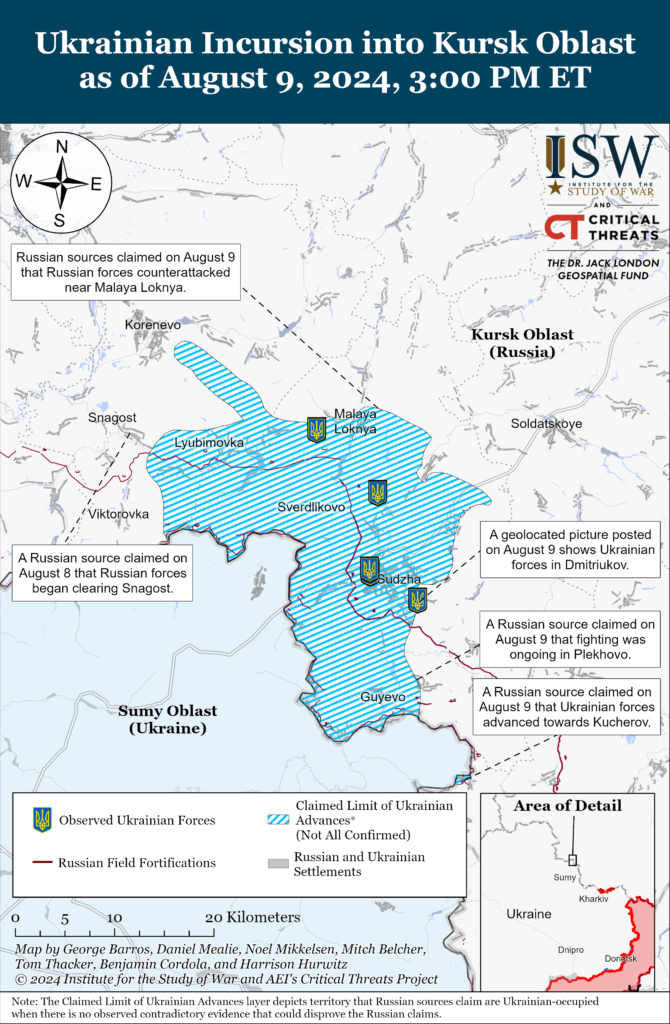
1. Initially, the Ukrainians with the raid and in sufficient depth and with partial control of some 350 square kilometers (a significant area for a war that has been static for the last twelve months, but obviously an insignificant area in front of the Russian vastness), created a big blow to the prestige of the Russian power. Which, even for a short time, is exposed, with the public of the region describing in the electronic media their anger and frustration because “Putin does not protect us”, and thousands being forced to leave their homes after an evacuation order, while many dozens of Russian soldiers surrender. This “profit” between two warring countries is not a small one, where the level of morale of each society determines to a significant extent the continuation of the war.
2. Conversely, in a Ukrainian society very tired of the continuation of the war and with heavy losses, such an incursion, even if of a temporary nature, offers a “victory show”. Much needed, not only for as long as it lasts, but mainly for how it overturns the bad image of the last twelve months by offering the feeling that “there is hope”. Of course, this positive feeling can be easily overturned if Russia launches another fierce attack that will bring results on one of the already “hot” fronts of the war.
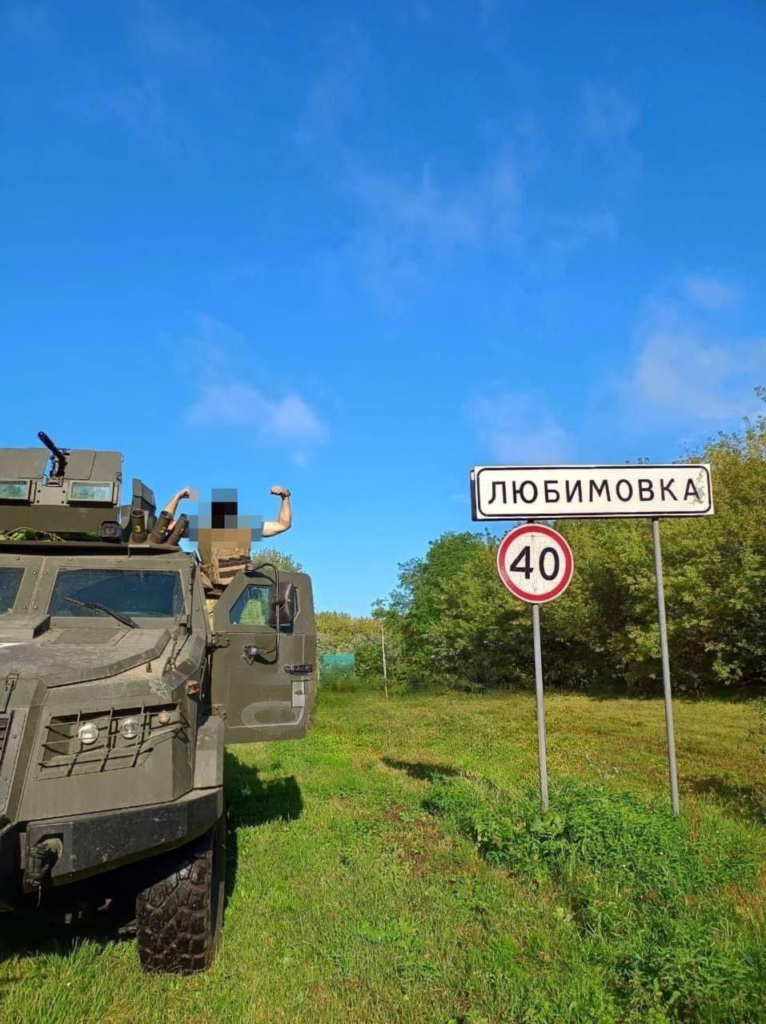
3. Again from the Ukrainian side, and at the geopolitical level, the raid and the corresponding Russian “confusion and embarrassment” which are not hidden, show the supporters of Kiev that nothing has yet been decided. Kiev here has a great need to show that it can withstand, even fight back, in order to provide arguments to its supporters in the West and especially in the US, even if Trump wins the November elections. Where his declared intention to “sell” Ukraine, he will find serious resistance in Congress and from many Republican senators and congressmen.
So if the raid ends with a Ukrainian positive sign (we wait to see), then it will “count” as an argument to maintain support, or the other way around! Here it is perhaps not a coincidence that we see in Kursk the action of “western” weapons such as Marder armored vehicles and Leopard tanks, but also deep strikes with HIMARS launchers, a clear “hint” that is, that these are paying off significantly and their flow must continue.
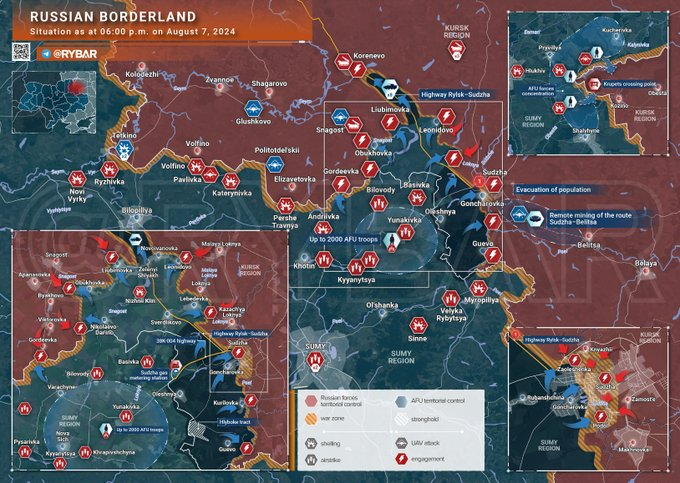
4. On an operational level, the raid demonstrates once again the organizational problems facing the Russian Armed Forces as well as their limits. Who clearly have the initiative in the last months in the unjust war they are waging and have forced the Ukrainians into very bloody battles, with little Russian territorial gains (always in front of Ukraine’s also very large area), but with hundreds of Ukrainian personnel.
Thus, Russia, which has chosen the “war of attrition” as a method, that is, the worst in terms of strategy and completely brutal in practice (and this is indicative of the poor capabilities), is now revealed that it does not have the manpower to cover its entire border line with the Ukraine. Leaving large zones to be defended by small units of troops and national guards, without experience and serious leadership, who retreated dozens of kilometers in a strong enemy surge.
In addition, the fact that the Ukrainians managed to organize a coordinated attack of regular and elite units, with artillery and anti-aircraft support, right next to the border with Russia without being detected, also shows the Russian gaps in surveillance and information.
5. The above highlighting of Russian inadequacy throughout the border zone is very likely to force Moscow to redeploy its forces. As – and here perhaps it is an operational interpretation of the Ukrainian attack – the Putin government can no longer avoid covering its border with Ukraine along its entire length, with strong forces. Which he will either move from the main front, or he will pull from his reserves, or he will be forced to recruit and mobilize more.
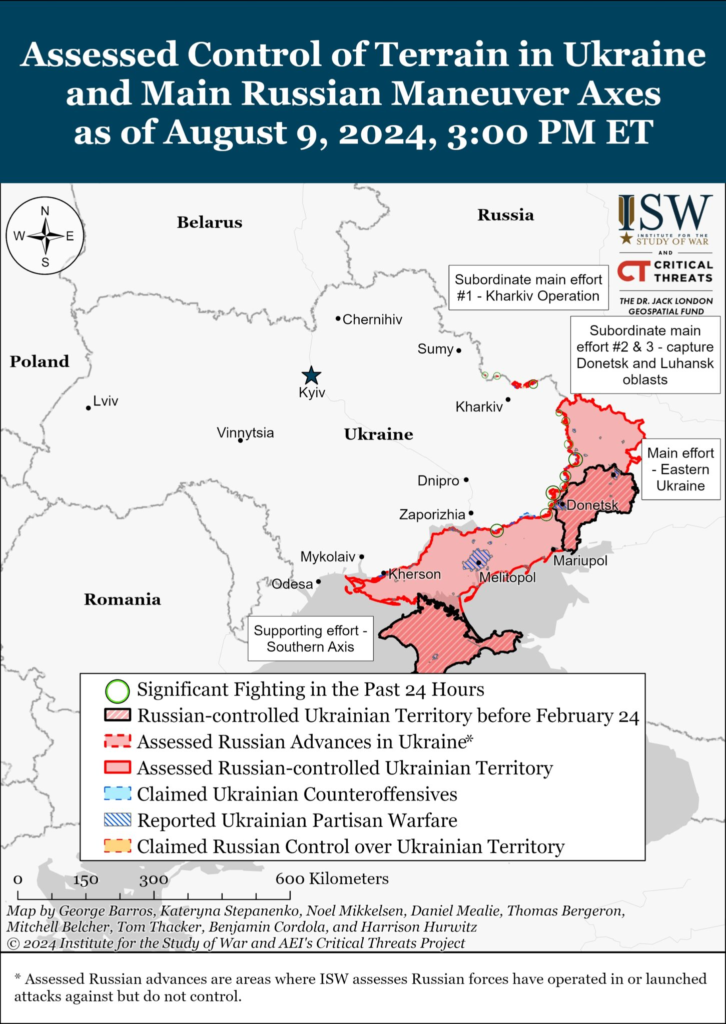
Simply put, today the Ukraine-Russia “border” is about 1,800 kilometers, from the north to the border with Belarus to the east, then down to the south and then west to Odessa. But of these, the active land front is quite a bit smaller, about a third. Ukraine has thus shown that it can make a serious incursion into “Russian depth” in an inactive combat zone. So Moscow must prevent such a repetition, which will be even worse in triviality. So he needs extra military personnel and material for guarding, which will be interesting in the coming months to see where he finds them.
6. Another possible Ukrainian success is the following, but we formulate it with reservation: If Kiev had information about an imminent significant Russian attack, with this attack it “upset” the Russian plans for some time and shifted the center of attention elsewhere. This – if it happened – has value, that is, if it succeeded in postponing a major Russian pressure. More generally, since we are already in August, the business days in Ukraine, before the heavy rains and “seas of mud” break out, are not many. The rasputitsa as it is called the season of rains and mud starts sometime in October, that is in about 70 days. So how many of them Ukraine “wins” by avoiding a new major Russian attack before any autumn break, which it hopes for regrouping, are significant.
What does Ukraine “pay” for all of the above? We said it from the beginning, we don’t know. The Russians claim around 1,000 Ukrainians dead so far, but these are unproven. But even if we accept that the Ukrainian losses are of this order of magnitude and greater, if the benefits are all of the above, maybe the raid was “worth it” for Kiev’s strategy. It will prove itself in the coming months. At the moment the Ukrainians have gained impressions, they have exposed Moscow both internally and internationally, they have something to “show” themselves after many months of bloody battles and their gradual retreat, only a few kilometers deep, but at a heavy cost blood and material.

However, it is impressive that the Russian propaganda has been hastily activated to discredit the raid in every way, characterizing it as “the last spasm of the Zelensky regime” and “a senseless sacrifice of Ukrainians”, as if they have special pain and interest either for Zelensky or for the soldiers of the country they have invaded…
The victory that will not be a victory
We are thus reminded that the Ukrainian war (as well as any ongoing war) is “triple” and of course interconnected in all its manifestations:
- First we have the real war, on the front lines.
- Then we have the “war” of international impressions and prestige and influence and international support, which both sides give.
- And then we have the “internal” war in Russia and Ukraine so that their societies continue to legitimize and tolerate the ravenous monster that eats their children.
Who will win in the end? Silly, as our own assessment is that whoever is “declared” as such, will have a “Pyrrhic victory” in his hands. If it is Ukraine, it will find itself with massive destruction on its soil, a broken economy and many dead and injured, a large refugee population and possibly a serious loss of territory. And with a serious democratic deficit if the extremists prevail inside it. If it is Russia, it too with great human loss and with a serious reversal of its twenty-year course to “westernize”, undermining its economy (which is now bloated with state military spending, i.e. temporary and without substantial development) by making an acrobatic geostrategic turn that no one knows her fate. At the same time seriously retreating to democratic expression, human rights, international legitimacy, saying goodbye to any “moral advantage” and sliding into malignant tribalism, historical revisionism and authoritarianism.

