

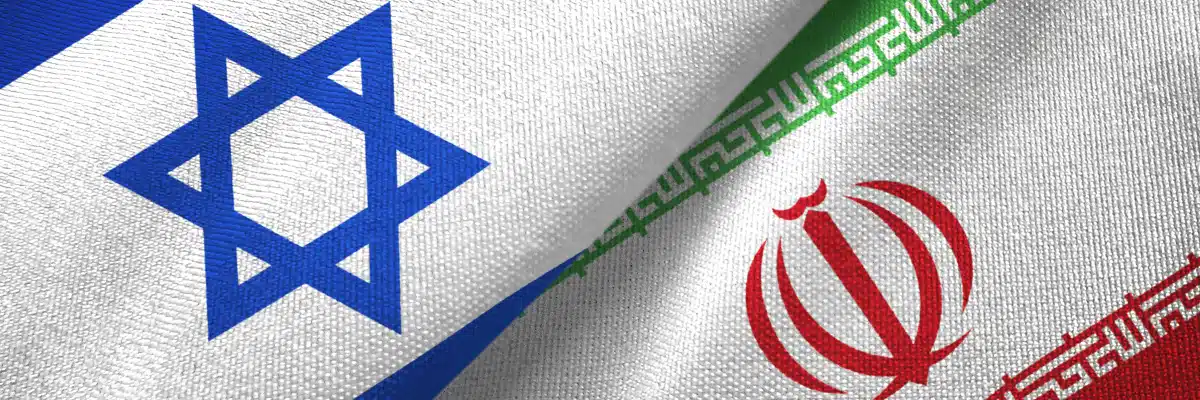
The issue of an impending Iranian attack on Israel is extremely complex, and the possibility of an Iranian attack remains the dominant scenario. The Iranians, however, may be reconsidering their commitment to severe retaliation against Israel.
This reconsideration of Iran’s commitment to attack Israel is due to any disagreements between Hezbollah and Iran.
The fear of even an autonomous attack by Hezbollah is the focus of the Israeli deterrence effort. The Minister of Defense of Israel, retired senior officer Galand, who due to circumstances did not become the head of the Israeli armed forces, made it clear that in the event of an attack by Iran, the terrible damage will be suffered by Lebanon as a whole. Several days have passed since the attack to neutralize Hamas’s Ismail Haniyeh. As long as there is no response from Iran’s side, the various non-state “proxies” have every reason to worry that Tehran is backing down.
It may be that American military power is extremely “persuasive” and leads to revisions. But the internal problems in the Islamic Republic and the impossibility of absolute control exposed by the successful operation against Haniyeh, prioritize the internal front. In this way, however, Iran risks losing key allies and the collapse of its successful – until recently – strategy against the Jewish state and control of the Middle East in general.
Prevent all against all
The game of deterrence in the Middle East is complex. A characteristic of it to this day, is that all sides do not know how to back down. All sides, regardless of power, appear to have as their top priority convincing their opponent that they are not going to back down no matter what. They don’t want to show weakness.
Israel, which has clear military superiority, wants to shape a situation that will ensure its primacy. At the same time, to convince his opponents of the impasse of the military option, so that he could later dictate the basic terms of an agreement at the negotiating table. In essence, he wants to repeat the successful model of the Abraham Accords with the Sunni states of the Middle East, for the possible closure of the other fronts as well.
Hamas, Hezbollah and in recent years the Houthis, for their part, wish to establish themselves as pivotal “players” in the region, managing to survive the future of Israeli attacks, regardless of severity. The 2006 Israel-Hezbollah war, in which the Jewish state failed to achieve its objectives, resulting in the adversary declaring victory, was a turning point. It mattered that Hezbollah was not defeated. “Winning” or “losing” were simplifying schemes related to communication management.
Israel’s weaknesses
An alternative interpretation of the delay in the retaliatory strike by the Iranians could be the desire to capitalize on the obvious fatigue and Israeli society from the prolonged war involvement and uncertainty.
The upheaval that brings to the daily lives of Israelis – Jews and Arabs – a war involvement that has broken every previous “record” of wars in which Israel has historically been involved, is a new element that has not gone unnoticed by its opponents. The unprecedented political unrest inside the country, of course, gives an additional dimension to the interpretation of the choices of the current Israeli leadership.
Israel is militarily powerful and diplomatically enjoys the unconditional support of the US, even when disagreements with US governments on practice are taken for granted. However, this, at the same time, also constitutes a weakness, as it is a factor of power that for any reason could be differentiated at some historical moment and lead to great upheavals.
Israel’s adversaries know the consequences of using its formidable military might, but they have learned to survive and regenerate. At the same time, they know the Israeli weak point and the pivotal role of the USA. They believe that there will be a geostrategic juncture that will constitute a historic opportunity, where Washington will not be able to impose its will unhindered. Then they will attempt to overturn what is currently taken for granted on the ground.
This means that those who point out that wars may be won, but it matters how peace is won, have a strong argument. Israelis must learn from this round of conflict with their rivals. It was precisely this terrifying power that led to their haughty treatment, through the belief that they would have no luck no matter what they attempted, with disastrous results.
Military power equal to policy tool
The surprise and failure of the intelligence system is not the first time it has knocked on Israel’s door. And if the Jewish state escaped the consequences of the “two sins” (Yom Kippur in 1973 and October 7, 2023), it should by all means avoid repeating the evil. This needs careful study and agreement to introduce revisions to Israeli policy in the given geopolitical context.
Military power is a political tool. By itself it cannot ensure in perpetuity that Israeli society will live and prosper. The consequences of the unknown cannot be measured a priori and should be taken for granted that they will set new parameters, which are not guaranteed to be successfully addressed when they occur.
This is also the essence of the wisdom of the historical leader of the Jewish state, David Ben-Gurion, who recommended special attention in the areas of social cohesion, the strengthening of diplomatic relations and the pursuit of peace. Although Ben Gurion recommended this as an “antidote” to weakness, it seems that both strength and weakness are related concepts. And their interpretation should be done taking into account the respective international and regional strategic environment with care and moderation.
A traditional strategy of the Israelis is to “buy” several years of restoration of deterrence, in the sense of the absence of war conflict, through war conflicts. During this time, military weaknesses are remedied and care is taken to ensure the economic strength of the country, always with an eye on the next round of conflict, where the state of Israel must survive.
The modern, fluid and changing international environment forces Israel not necessarily to abandon this strategy, but to re-examine it in the context of the new world that is emerging. As it has so far proved, much that we thought to be true has simply changed.