



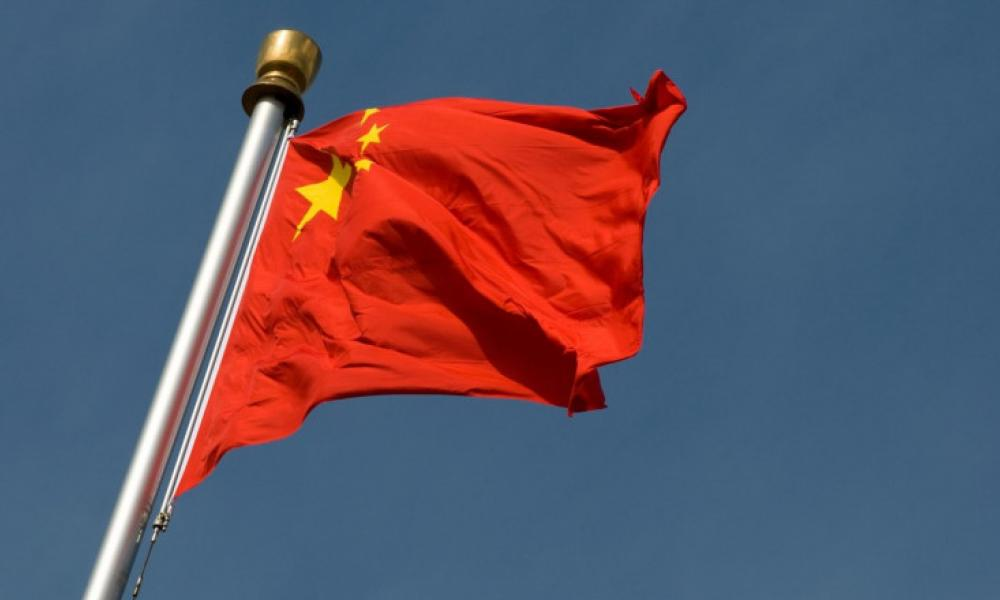
China rejected NATO’s accusations that it would pose a challenge to the interests and security of the Western military bloc and said it was against any attempt by the North Atlantic Alliance to expand its influence in the Asia-Pacific region.
In a statement sent on Tuesday during the Vilnius summit, NATO said the People’s Republic of China (PRC) threatens its interests, security and values with its “ambitions and coercive policies”. “China uses a wide range of political, economic and military tools to increase its global footprint and project its power, while remaining opaque about its strategy, intentions and military training. China’s malicious hybrid and cyber operations and confrontational rhetoric and disinformation are targeting allies and harming the security of the Alliance,” NATO leaders said in their statement.
The Chinese mission to Europe responded in a statement saying that what NATO says about China ignores basic facts, distorts the reality about China’s position and policies and deliberately defames China. “We strongly oppose and reject these accusations,” it said in a statement.
Stoltenberg: China challenges international rules-based order through ‘coercive behaviour’
NATO Secretary General Jens Stoltenberg said that while China is not an “adversary” of NATO, it is increasingly challenging the international rules-based order through its “coercive behavior.” “China is increasingly challenging the rules-based international order by refusing to condemn Russia’s war against Ukraine, threatening Taiwan and conducting a major military buildup,” Stoltenberg said.
However, NATO did not mention the issue of Taiwan in its announcement. Taiwan’s foreign ministry said it was “very important” that Stoltenberg once again made clear his concern for the security of the Taiwan Strait. “Taiwan is a responsible, democratic member of the Indo-Pacific region and is willing to work with like-minded partners such as Europe and the United States to jointly combat coercion and provocations by authoritarian regimes,” he added.
Several leaders from the Asia-Pacific are also participating in the NATO summit
Several Asia-Pacific leaders with whom NATO has close relations are also participating in the two-day summit in Vilnius. Japanese Prime Minister Fumio Kishida, who joined the allies for a second time, aimed to remind NATO to be mindful of the dangers in East Asia, while South Korean President Yun Suk-geol sought more international cooperation deep in the field of security against it against the backdrop of North Korea’s threats and tensions with China.
In May, Kishida said Japan has no plans to join NATO, even as NATO opens an office in Tokyo, its first in Asia, to facilitate consultations in the region. China strongly opposes NATO’s “eastward move in the Asia-Pacific region”, Beijing said, and warned that any action that threatens its “legitimate” rights and interests will receive a “decisive response”.
Several Asia-Pacific leaders with whom NATO has close relations are also participating in the two-day summit in Vilnius. Japanese Prime Minister Fumio Kishida, who joined the allies for a second time, aimed to remind NATO to be mindful of the dangers in East Asia, while South Korean President Yun Suk-geol sought more international cooperation deep in the field of security against it against the backdrop of North Korea’s threats and tensions with China.
In May, Kishida said Japan has no plans to join NATO, even as NATO opens an office in Tokyo, its first in Asia, to facilitate consultations in the region. China strongly opposes NATO’s “eastward move in the Asia-Pacific region”, Beijing said, and warned that any action that threatens its “legitimate” rights and interests will receive a “decisive response”.
In Tuesday’s statement, NATO also said China is trying to control key technological and industrial sectors, critical infrastructure and strategic materials, as well as supply chains, and Beijing has also used its economic leverage to create strategic dependencies and increase his influence.
China’s state-run news agency Xinhua responded with a story showing that wars and conflicts involving NATO states suggest the military bloc poses a “serious challenge” to global peace and stability. “Despite all the chaos and conflict that has already been caused, NATO is expanding its tentacles in the Asia-Pacific region with the express purpose of controlling China,” reports Xinhua.
